
Last updated November 15, 2026
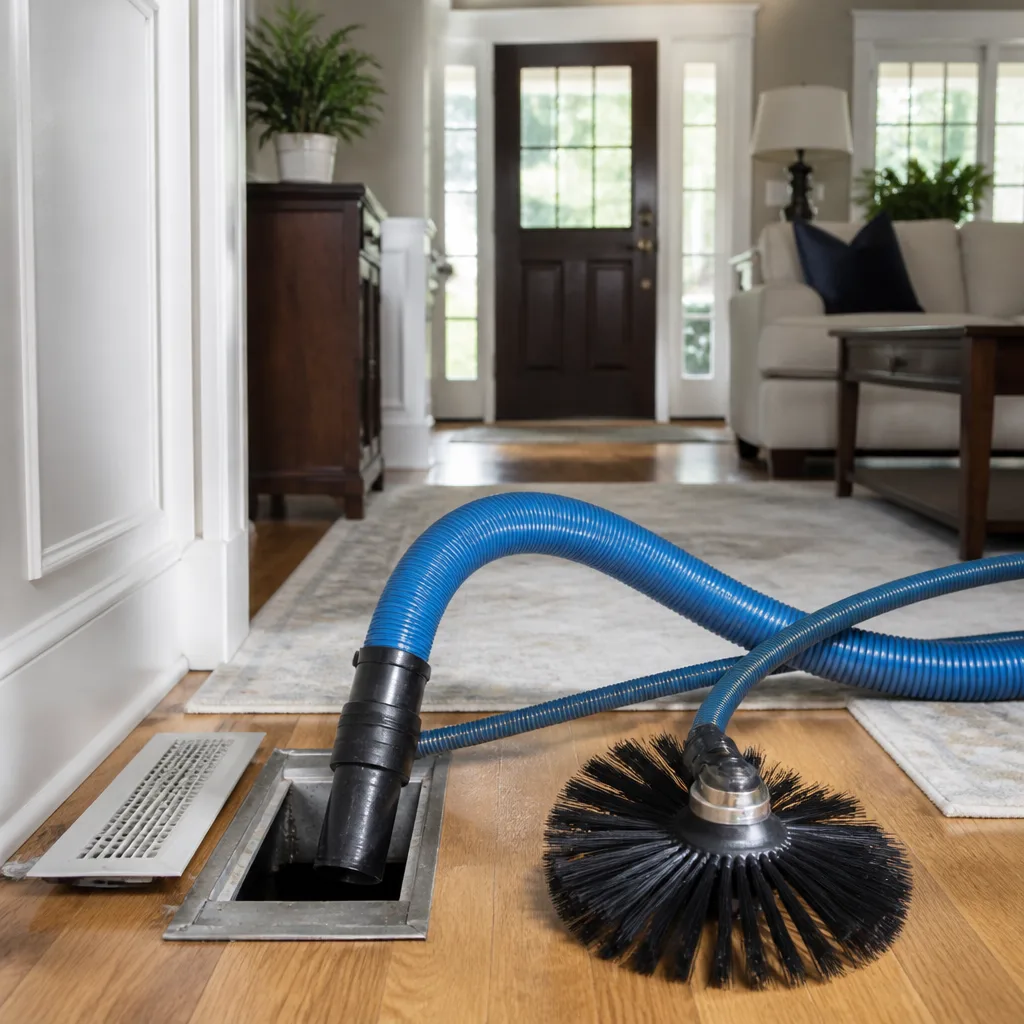 Whole-home duct cleaning
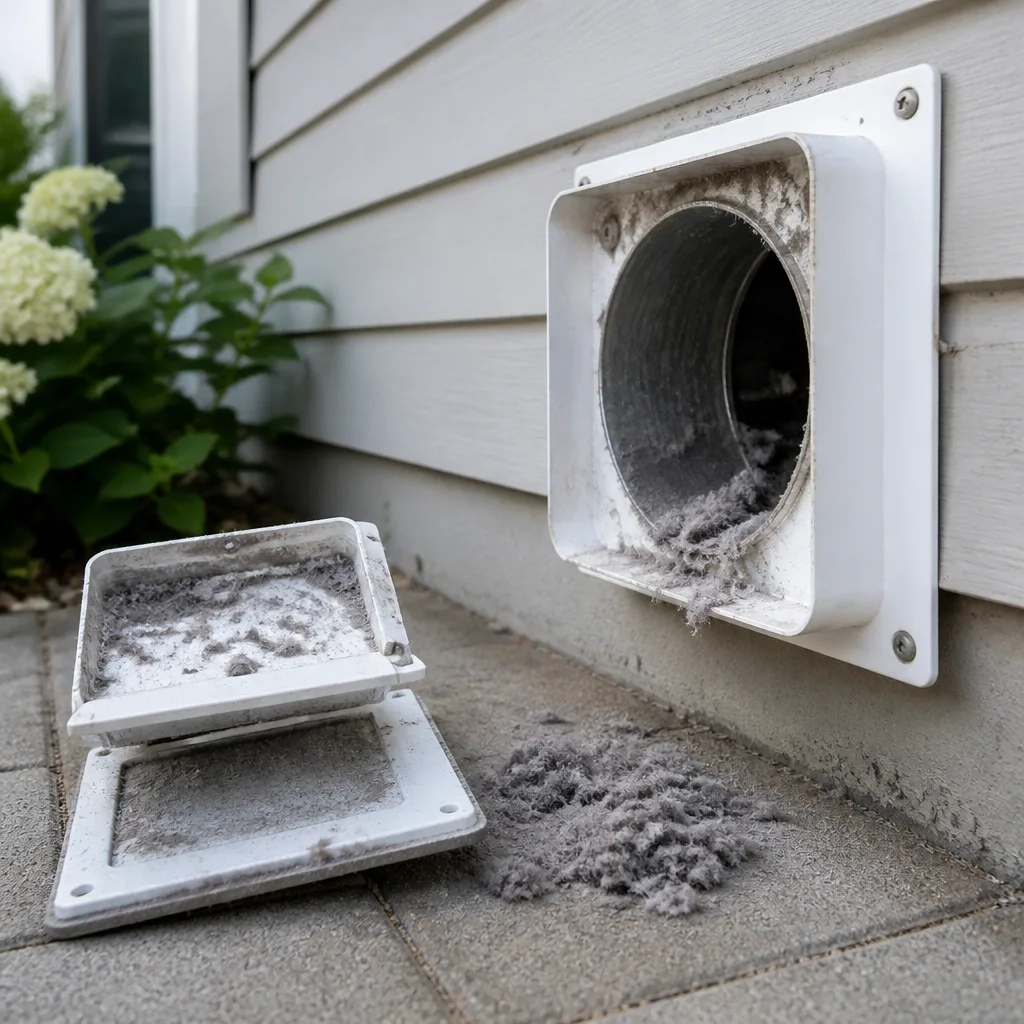 Dryer vent cleaning
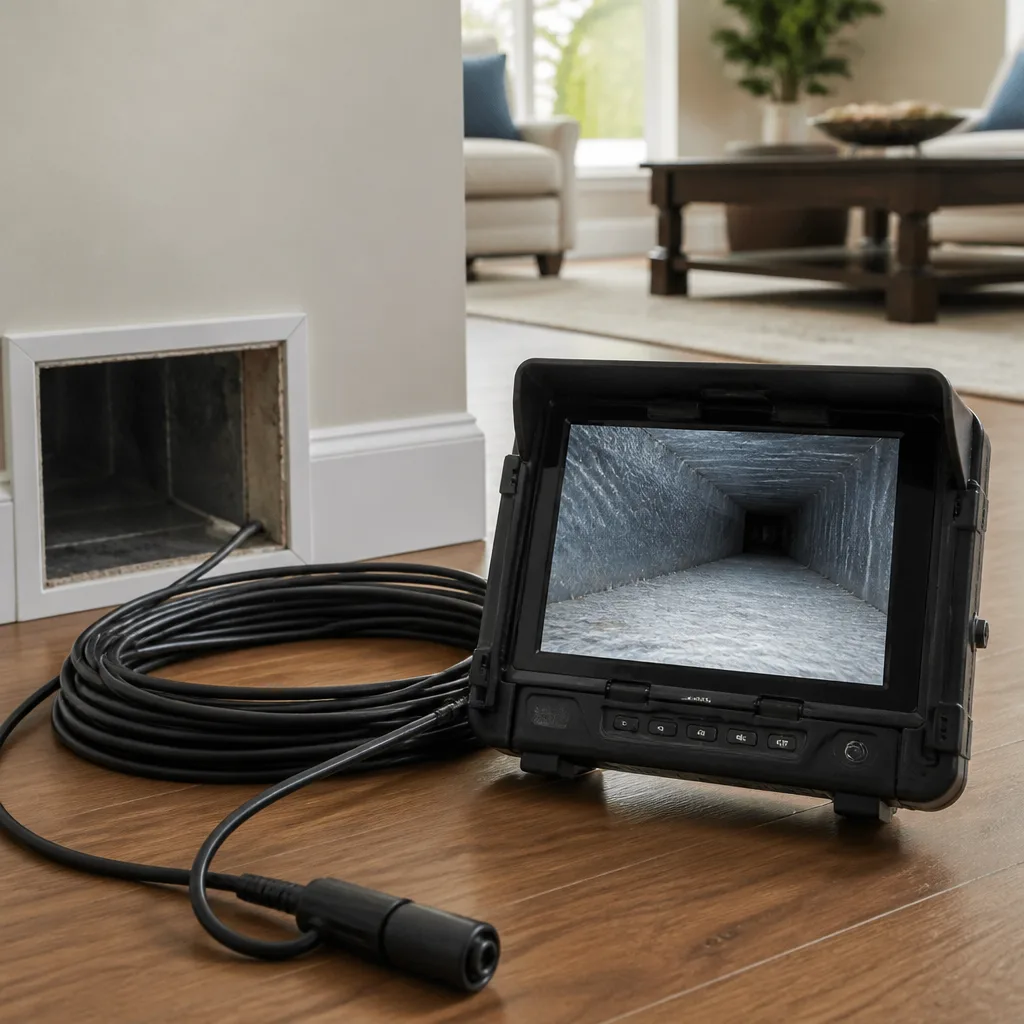 Camera inspection
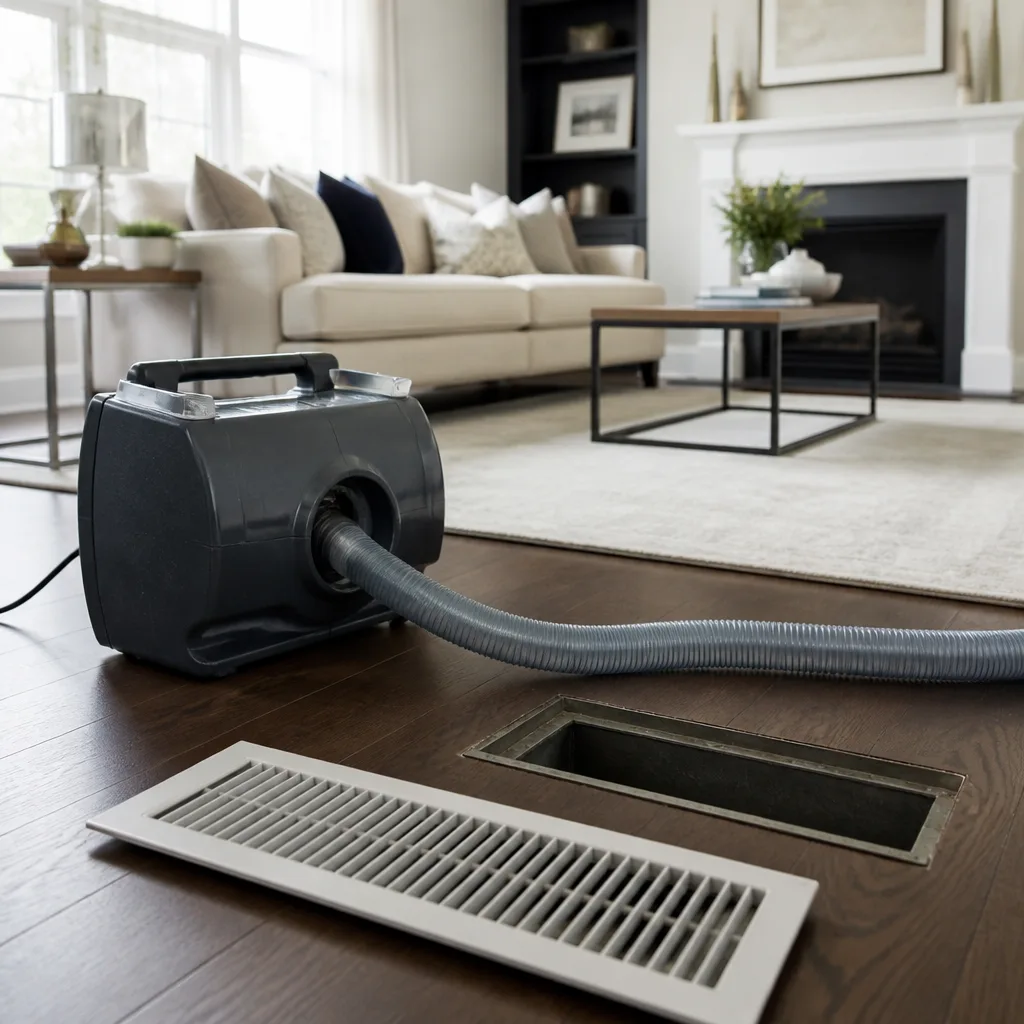 Sanitizing & deodorizing
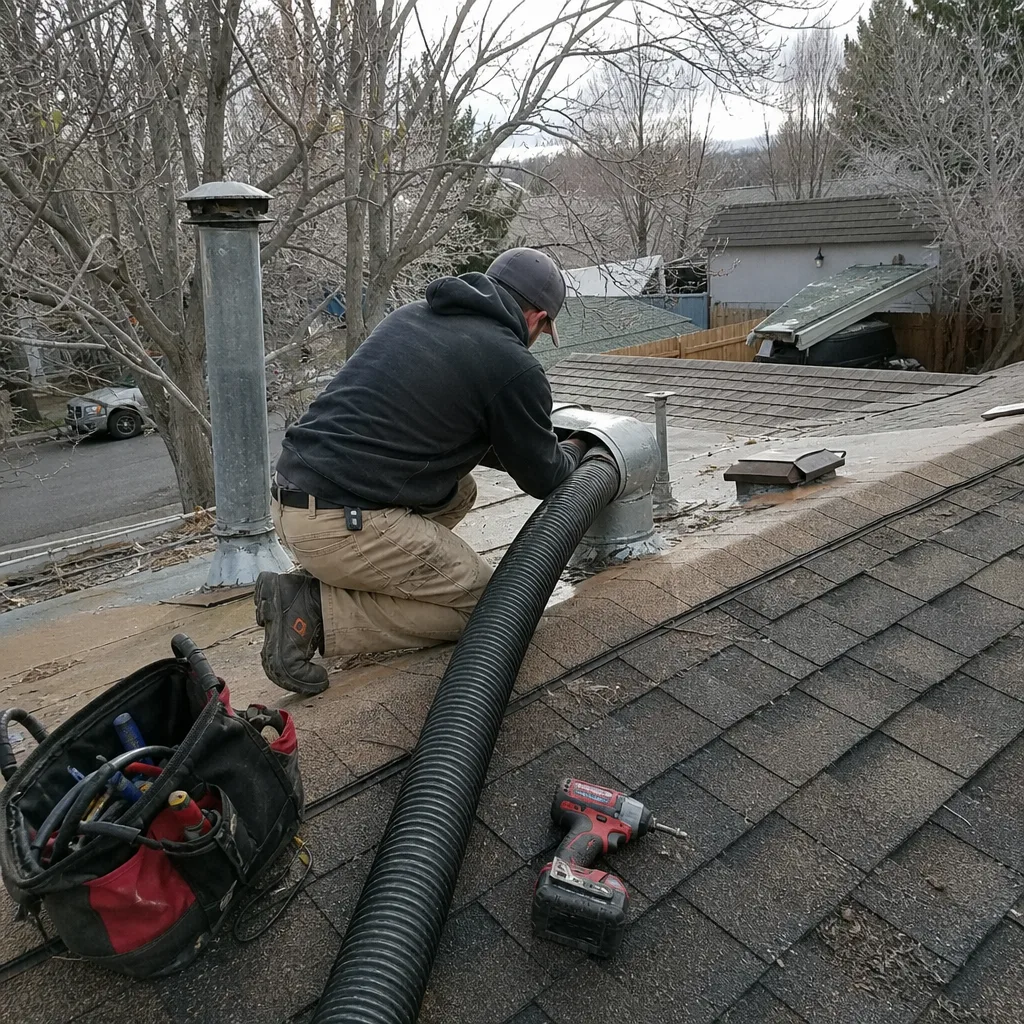
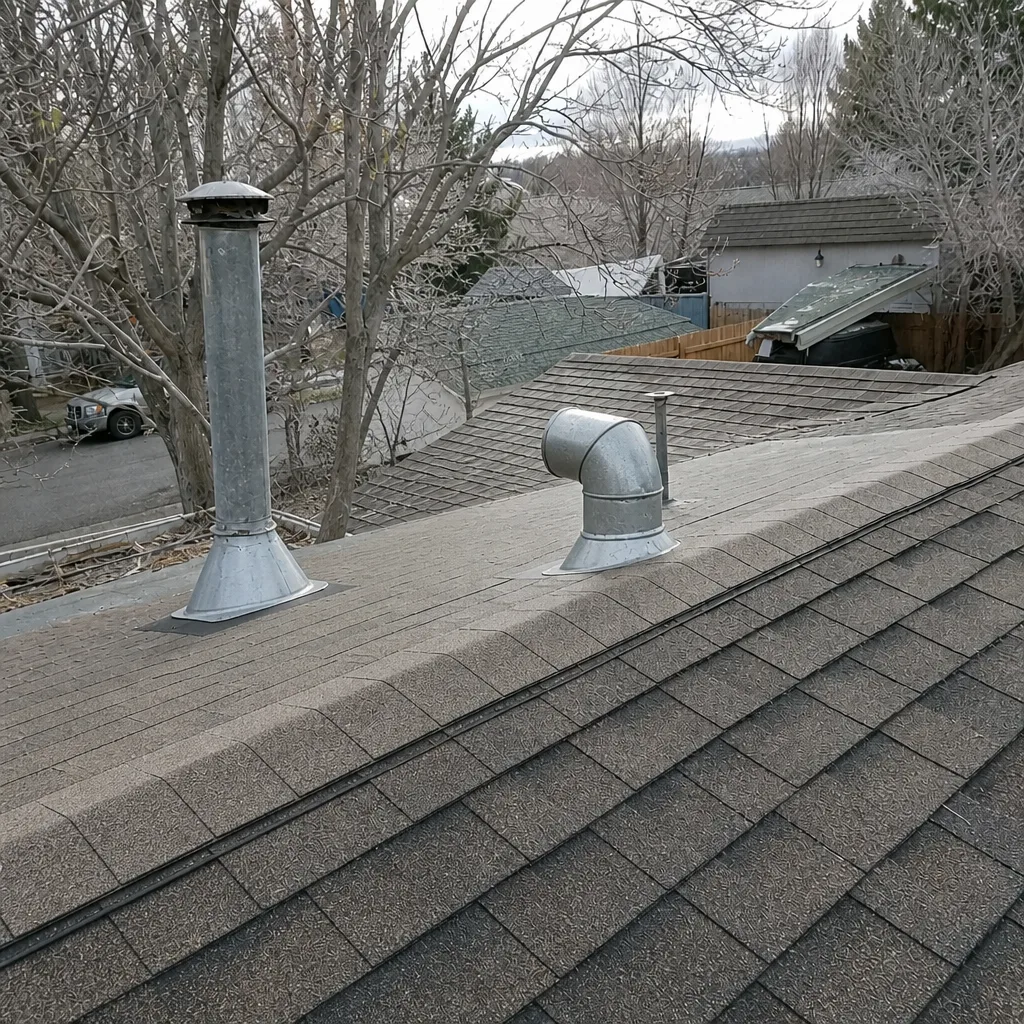
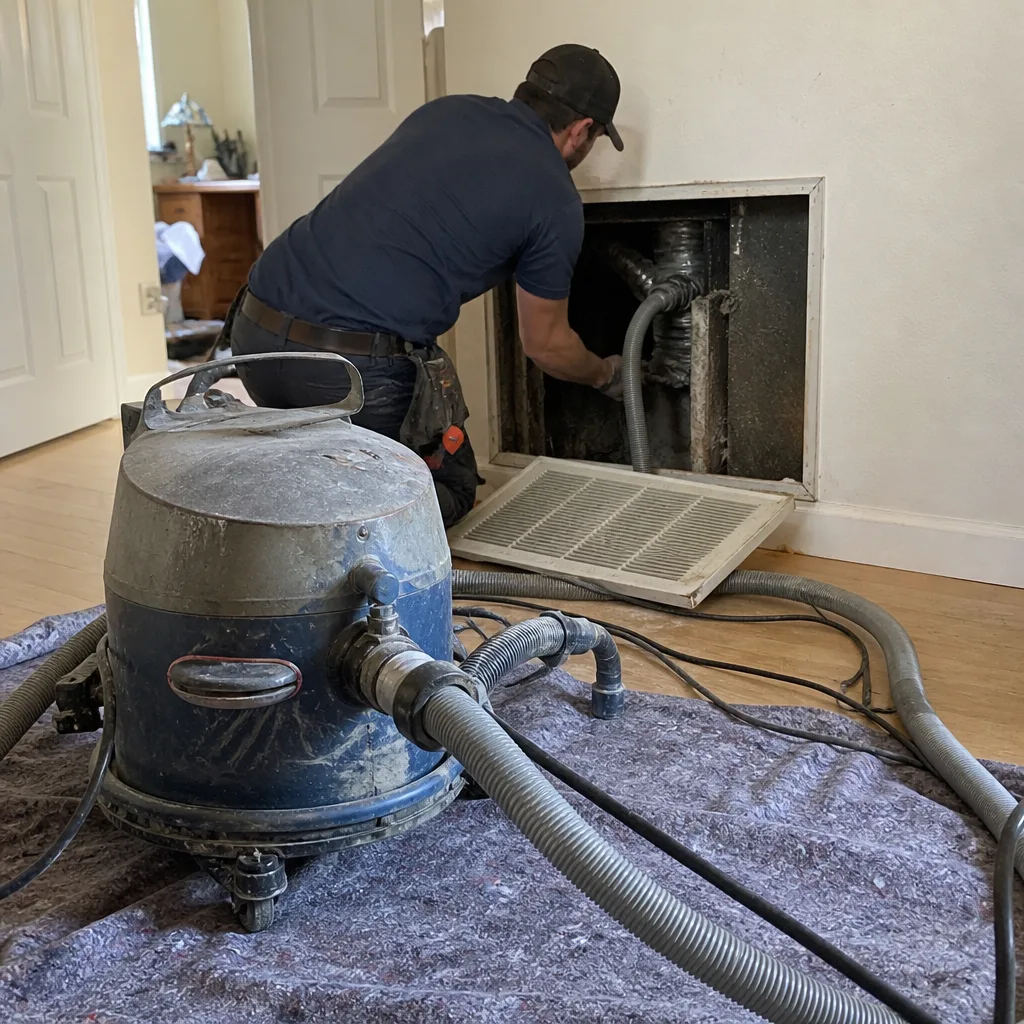
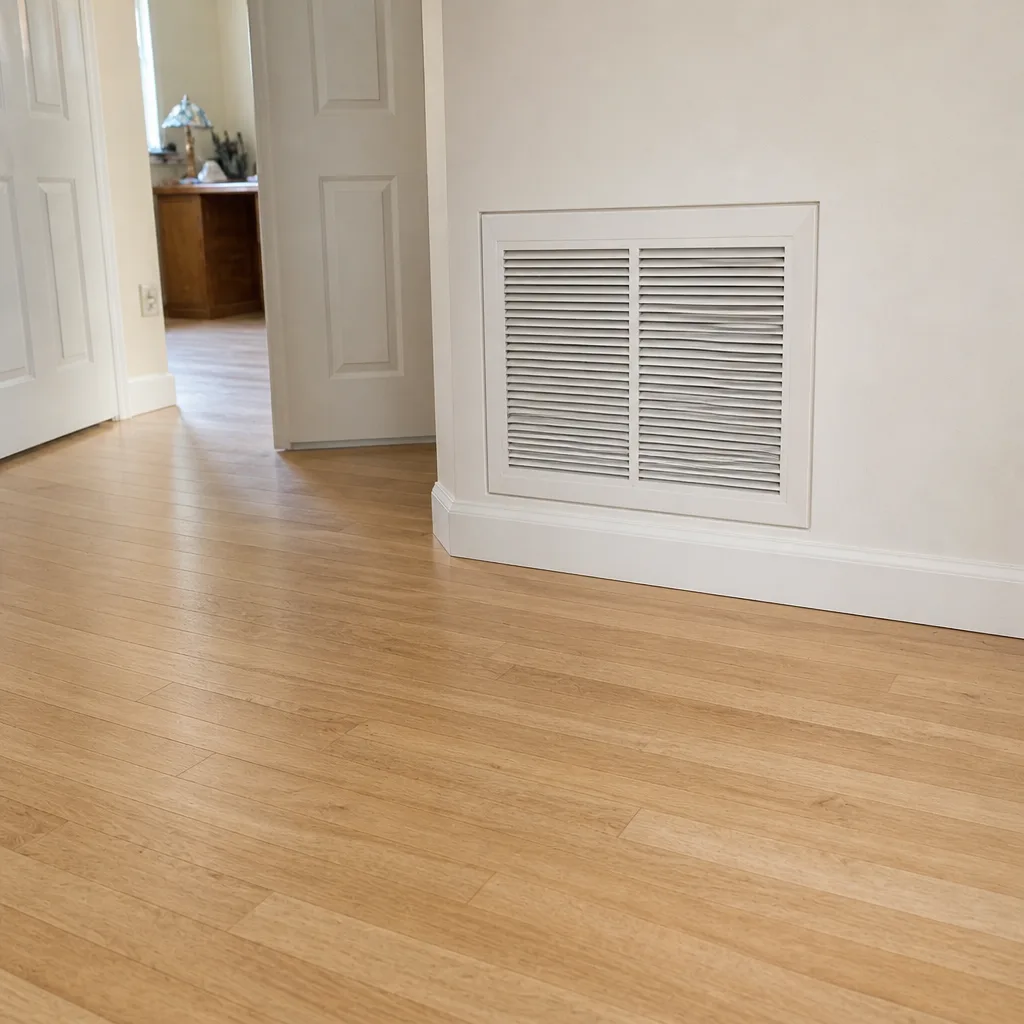
Whole-system duct and dryer vent check with before-and-after photos - you see exactly what came out of your vents
That "$99 whole-house special" is a bait ad - the real number appears once they are in your hallway, or the "clean" is a shop-vac at the register. We photograph the inside of your ducts before and after instead.
DIY vs Professional Air Duct Cleaning: The Reno Homeowner’s Decision Guide
Blowing compressed air into a duct without negative pressure on the system exit doesn’t clean that duct. It pushes debris into the living space and drives it deeper into the network. That single physical fact explains most of the confusion around DIY duct maintenance, and it’s the line we want to draw clearly for you here. Some tasks in a Reno home genuinely belong to the homeowner, and they’re worth doing well. Others require containment and extraction equipment that no consumer kit replicates. This guide walks through which is which, what each method physically accomplishes, and how to tell whether a previous DIY attempt left you with a bigger problem than you started with.
Quick Answer
DIY duct maintenance works for surface-level tasks: cleaning register covers, vacuuming accessible openings, changing filters, and clearing the exterior dryer vent flap. It does not work for cleaning the interior of the duct network, because effective duct cleaning requires agitating debris and capturing it under HEPA filtration at the same moment. Without simultaneous negative-pressure containment, agitation spreads contamination instead of removing it. If you’ve seen visible dust blow from a register, smelled mustiness, or dealt with rodents or smoke, that’s professional territory.
Styles & brands we work with
- Whole-home duct cleaning
- Dryer vent cleaning
- Camera inspection
- Sanitizing & deodorizing
Table of Contents
- What “cleaning” physically requires
- What a Reno homeowner can legitimately maintain
- The containment problem: why agitation without extraction makes things worse
- Equipment reality check: consumer kits vs. Rotobrush and Nikro
- When DIY is a reasonable interim measure
- When DIY creates liability: mold, rodents, smoke
- How to tell if a DIY attempt displaced debris
- What makes Reno ductwork different
What “Cleaning” Physically Requires
A duct system is a closed network of sheet metal, flex, and sometimes fiberboard, with a blower at one end and registers at the other. Debris in that network is not loose on a floor you can sweep. It clings to duct walls, collects at elbows, sits on the top surface of horizontal runs, and packs into transition points where flex meets rigid. To actually remove it, three things have to happen at once: the debris must be dislodged from the surface, it must be captured before it settles again, and the surrounding space must be protected from whatever escapes.
That three-part job is the entire reason professional duct cleaning looks the way it does. Here’s the sequence in practical terms:
- Containment goes up first. Negative-air equipment pulls the working area into a slight vacuum so disturbed particles move toward the machine, not into your kitchen.
- Agitation breaks the bond. A mechanical brush physically contacts the duct wall and loosens what’s stuck there. Air alone won’t do it on caked debris.
- HEPA extraction captures the load. A vacuum rated for fine particulate pulls the loosened material out of the airstream and traps it.
- Inspection confirms the result. Cameras and before-and-after photos show what changed.
Skip step one and you’ve turned a dirty duct into an airborne problem. Skip step two and you’ve moved the loose dust but left the coating that keeps feeding it back. In our experience, the homeowner-side question is rarely “should I clean my ducts” but “which part of this can I safely do myself without making the rest harder.” That’s a fair question, and it has a real answer.
What a Reno Homeowner Can Legitimately Maintain
There’s a real list here, and it’s worth taking seriously. These tasks genuinely improve indoor air quality in a Reno home and cost nothing but time. Do them well and you’ll extend the interval between professional cleanings. What these tasks don’t do is substitute for cleaning inside the duct network itself.
- Register covers. Remove each supply and return grille, wash it in the sink with dish soap and warm water, dry it fully, and reinstall. Reno’s high-desert dust loads these fast, and a dirty grille is often what a homeowner thinks is a dirty duct. Clean grilles monthly during heating and cooling season.
- Filter housing. Pull the filter, then vacuum the housing interior with a brush attachment and wipe the gasket. A filter that seats poorly lets unfiltered air bypass entirely, which is a bigger problem than a slightly dirty filter. Check the fit every time you change it.
- Accessible duct openings. Where a register boot or return plenum is exposed, you can reach a few inches in with a vacuum hose and a soft brush. Stay within arm’s reach and don’t push tools you can’t see or retrieve.
- Exterior dryer vent flap. Clean lint from the outside hood and make sure the damper swings freely. This is a genuine fire-safety check, and it’s the safe half of dryer vent maintenance. The full-length interior vent line is a different job.
- Return air path. Vacuum the floor or wall cavity below a return grille where dust accumulates. That dust is on its way back into the system if you leave it.
What all five tasks share is reach. Every one of them works on a surface you can see and touch. Effective air duct cleaning in Reno, by contrast, addresses the interior of a network that runs through walls, floors, and attics you can’t open up with a shop vac. That’s the honest boundary, and it’s where the containment problem starts.
The Containment Problem: Why Agitation Without Extraction Makes Things Worse
This is the physics point, and it’s the one most duct cleaning debates skip. Consider what happens when you disturb settled dust inside a closed duct with air or a brush and no capture at the exit. The dust becomes airborne. The airstream carries it somewhere. It goes one of two directions: out through the nearest register into a room, or further down the duct to settle at the next elbow and start the cycle again. Both outcomes are worse than doing nothing.
Professional duct cleaning is engineered around that problem. We run Abatement Technologies negative-air equipment, the same class of tooling used in mold and asbestos abatement, to put the whole system under slight negative pressure during the job. Debris disturbed at one end of the duct doesn’t have anywhere to go except toward the machine. That’s the sequence casual cleaning skips, and it’s why “blowing out the ducts” is one of the best-known ways to make a dust problem noticeably worse.
Containment also protects the occupied space. When we’re working in a Reno home, the rooms you live in stay usable. That matters for households with asthma, young children, or pets, where airborne particulate load during a cleaning is exactly what you don’t want to introduce.
The takeaway is narrow and practical: agitation without simultaneous HEPA extraction is not half a cleaning. It’s a redistribution event. If you take one fact away from this guide, take that one, because it defines every DIY decision that follows.
Equipment Reality Check: Consumer Kits vs. Rotobrush and Nikro
Consumer duct cleaning kits generally consist of a flexible hose with a brush head, sometimes driven by a shop vac, sometimes by a drill. They’re sold as a fix for a dust problem and marketed on convenience. Here’s what they physically are: a low-power agitation tool attached to a vacuum with a coarse filter, operated through a single register opening. Set that against a professional setup and the gap isn’t marketing. It’s filtration rating, airflow, and the ability to reach more than a few feet.
- Filtration. A shop vac with a standard filter passes fine particulate right back into the airstream. Our Nikro HEPA-rated vacuum systems are rated to capture particles down to 0.3 microns, not just the visible dust a standard filter stops.
- Agitation reach and force. Rotobrush mechanical brushing is a purpose-built system that drives a rotating brush through duct runs, contacting the wall surface and loosening caked material. A consumer drill brush turns weaker and can’t follow a duct past the first elbow in most homes.
- Containment. No consumer kit includes negative-air equipment. That’s the whole game, and it’s the equipment a homeowner can’t reasonably buy or run.
We’re not arguing for mystery. The reason to use a documented system is that the result is inspectable. Rotobrush dislodges, Nikro captures, Abatement Technologies contains, and before-and-after photos show what changed. That’s a process a homeowner can verify rather than a promise to trust. Understanding what air duct cleaning actually involves is the best way to judge any quote you get.
When DIY Is a Reasonable Interim Measure
There are real situations where DIY is the sensible move, and we’d rather you hear them from us plainly. The pattern is always the same: the problem is accessible, the scope is limited to a surface, and no contamination has been introduced that needs contained removal.
Reasonable DIY scenarios include:
- Routine register cleaning and filter maintenance between professional service visits.
- Visible dust on a return grille or in the floor cavity below it that you can vacuum directly.
- A dusty home after a nearby wildfire smoke event, before you’ve had a chance to schedule a cleaning. Vacuum surfaces, change the filter, run the system fan, and don’t blow air into the ducts.
- Light, cosmetic dust inside a boot you can reach easily.
- Cleaning the exterior dryer vent hood and lint trap.
Notice what’s absent from that list: anything that requires pushing an agitation tool into the unknown part of a duct run. In our experience, that’s where DIY efforts in Reno go wrong. A homeowner has a problem they can see at the register, assumes the source is further in, and reaches for a drill-mounted brush. What happens next is what the containment problem section of this guide covers. The right move in every interim scenario is to clean the accessible surface and schedule the deeper work for equipment that can do it without spread.
When DIY Creates Liability: Mold, Rodents, Smoke
Three situations push duct cleaning out of “helpful homeowner habit” and into professional scope, and it’s because DIY doesn’t just fail in these cases, it can create a problem you can’t undo by cleaning harder.
Mold and microbial growth
If you’ve had a moisture event or a persistent musty odor, the ducts may be supporting microbial growth. Agitating that growth with a shop vac without HEPA capture aerosolizes spores into the living space. Professional remediation requires containment first, and often treatment after cleaning. We carry Guardsman-grade protective treatment capability to add a defensive layer once the system is clean, which is a step a homeowner can’t replicate with a store-bought spray. If you suspect mold, don’t test the theory by cleaning it yourself. Call a professional.
Rodent activity and nesting
Rodents in the duct system aren’t just a hygiene concern; they can introduce droppings and nesting material that carry real health risk when disturbed. That material needs contained removal, not a vacuum attachment. This is one situation where doing it yourself is genuinely risky, not just ineffective. Professional crews treat this with containment and proper protective equipment.
Smoke damage and post-fire residue
After a structure fire or a significant smoke event, soot residue is chemically different from ordinary dust. It clings to surfaces, it can carry odor for months, and it needs the same containment class of equipment used in restoration work. Agitating smoke residue with a consumer kit spreads odor throughout the home rather than removing the source.
There’s also the repair question. A damaged or leaking duct run will re-contaminate a clean system within weeks. This is why we repair what we find rather than flagging it for another contractor. If you’re unsure whether your system has a leak, ask. It’s a quick inspection and it changes the answer to “how often should I clean?” entirely.
How to Tell if a DIY Attempt Displaced Debris
Here’s a scenario worth taking seriously: you or someone before you ran a shop vac or air compressor through a register, and now you’re not sure whether the duct got cleaner or the dust just moved. There are recognizable signs. The pattern to look for is that the problem looks worse now, at a different location, or is more persistent than before the attempt.
Watch for these signals:
- Dust reappears faster than before. If a register you thought you cleaned collects dust within days, debris may have been pushed to a nearby section and is now feeding back into the airstream.
- New dust appears at a different register. Debris moved downstream and is settling where it wasn’t before.
- A musty or dusty smell in one room. That usually means material is now concentrated in one duct run rather than distributed.
- Visible dust settling on horizontal surfaces shortly after the system runs. The system is aerosolizing debris that’s now reachable by airflow.
- A recently cleaned filter that loads quickly. The filter is doing the job the ducts should be doing.
If more than one of those is true, the honest answer is that a standard cleaning may not be enough until the displaced material is located and removed. That’s a discovery step, not a sales pitch. We look before we clean, and if the contamination is in a spot the standard process won’t reach, we say so. If you suspect this has happened, describe it when you call and we’ll plan accordingly.
What Makes Reno Ductwork Different
Reno sits in high desert, and that shapes both how fast ducts load and what the load is made of. The summer dust is fine, mineral-heavy, and gets pulled in through every return. Wildfire smoke in the surrounding Sierra foothills sends particulate through the system in waves that don’t line up with a maintenance calendar. Winter heating runs long and pushes a lot of dry air through the ducts, which matters for homeowners with allergy concerns and for anyone running a whole-home humidifier. The result is that a duct cleaning schedule that works on the East Coast doesn’t necessarily match Reno’s rhythm.
The housing mix adds a wrinkle. Reno’s older neighborhoods have plenty of older duct systems, and the tract homes that went up in the area over the past few decades have duct designs that are efficient on paper but can have flex runs with tight transitions where debris collects. If your home has a Honeywell or Aprilaire whole-home air quality system, the filtration, humidity control, and ductwork are working as one system. Treating the ducts in isolation while the filtration side of the system is underperforming doesn’t get you the result you’re after. Our technicians understand how those systems connect, and we work with both brands.
The other Reno-specific issue is dryer vents. Lint buildup in a dryer vent line is the leading cause of dryer fires, and it’s a fire safety problem, not a maintenance afterthought. Exterior hood cleaning you can do yourself; full-length vent-line clearance requires equipment and it’s a job worth doing right. If you haven’t had the exterior flapper checked in a while, start there, then schedule the full line. Understanding the difference between the two is the whole point. Dryer vent cleaning is a fire-safety service, and treating it as one changes what you’re willing to skip. If your duct concern extends to the rest of the system, duct cleaning in Reno covers the interior network end to end, including repair of what we find.
Common Mistakes to Avoid
- Blowing compressed air into a register. This is the single most common DIY error and the one most likely to make a dust problem worse. Without negative pressure on the system, you’re redistributing debris, not removing it.
- Trusting a shop vac with a standard filter to clean ducts. A coarse filter passes fine particulate right back into the room. If the filter isn’t HEPA-rated, the vacuum is a dust spreader at fine-particle scale.
- Skipping the grille and blaming the duct. In Reno’s dusty climate, a dirty register cover looks exactly like a dirty duct system. Wash the grilles first and see whether that resolves the visible issue before scheduling an interior cleaning.
- Running a drill-mounted duct brush past the first elbow. Consumer brush tools are built for straight, shallow runs. Pushing them deep risks dislodging a brush head you can’t retrieve and disturbing debris with no capture.
- Treating a musty smell as cosmetic. A persistent smell is a signal of moisture or microbial growth, and agitating it without containment pushes spores into the living space. Address the cause before cleaning anything.
- Cleaning the ducts without checking for leaks. A leaking duct run re-contaminates a clean system quickly. If the system has air-loss problems, repair belongs in the same visit and not deferred to another contractor.
- Forgetting the dryer vent. Exterior lint cleaning is necessary and insufficient. Lint packs the full length of the vent line, and the fire risk lives in the interior of that line, not on the exterior flap.
See the difference
 Before
 After
 Before
 After
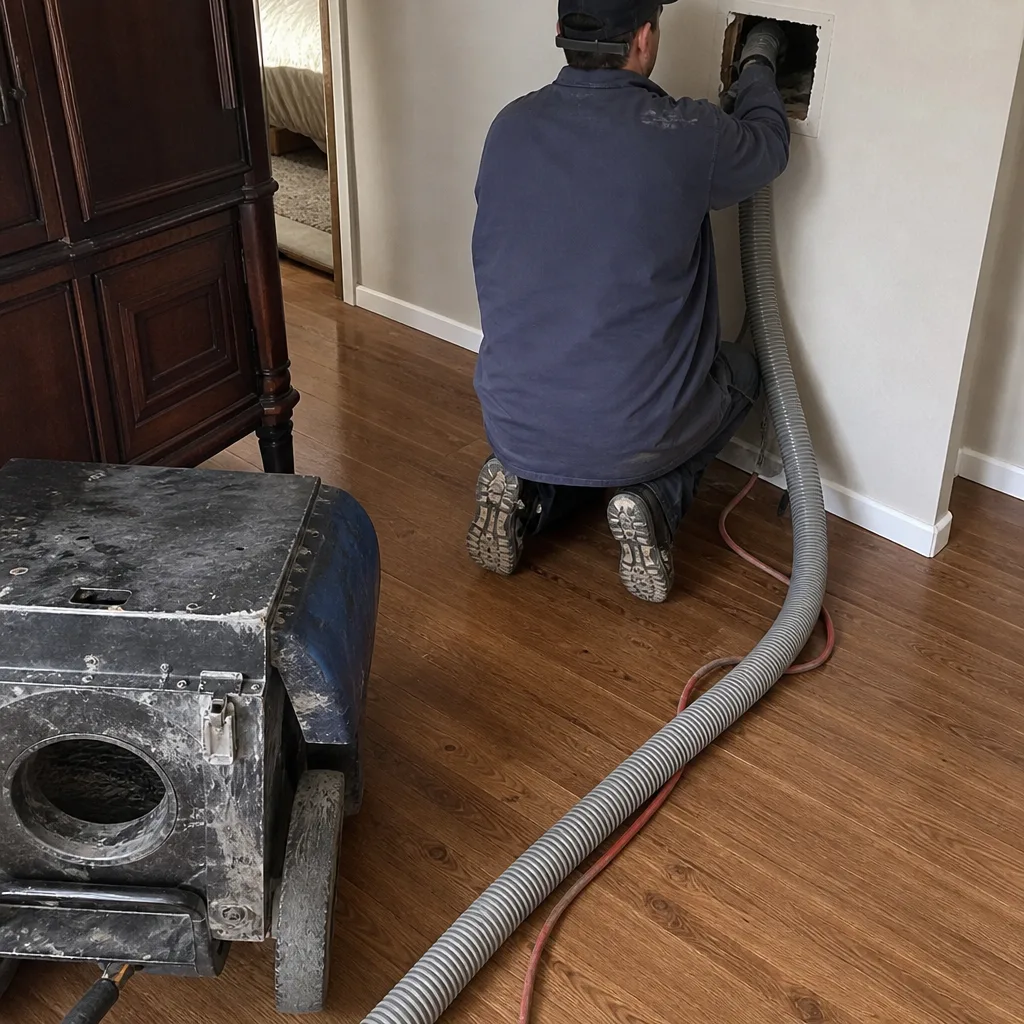 Before
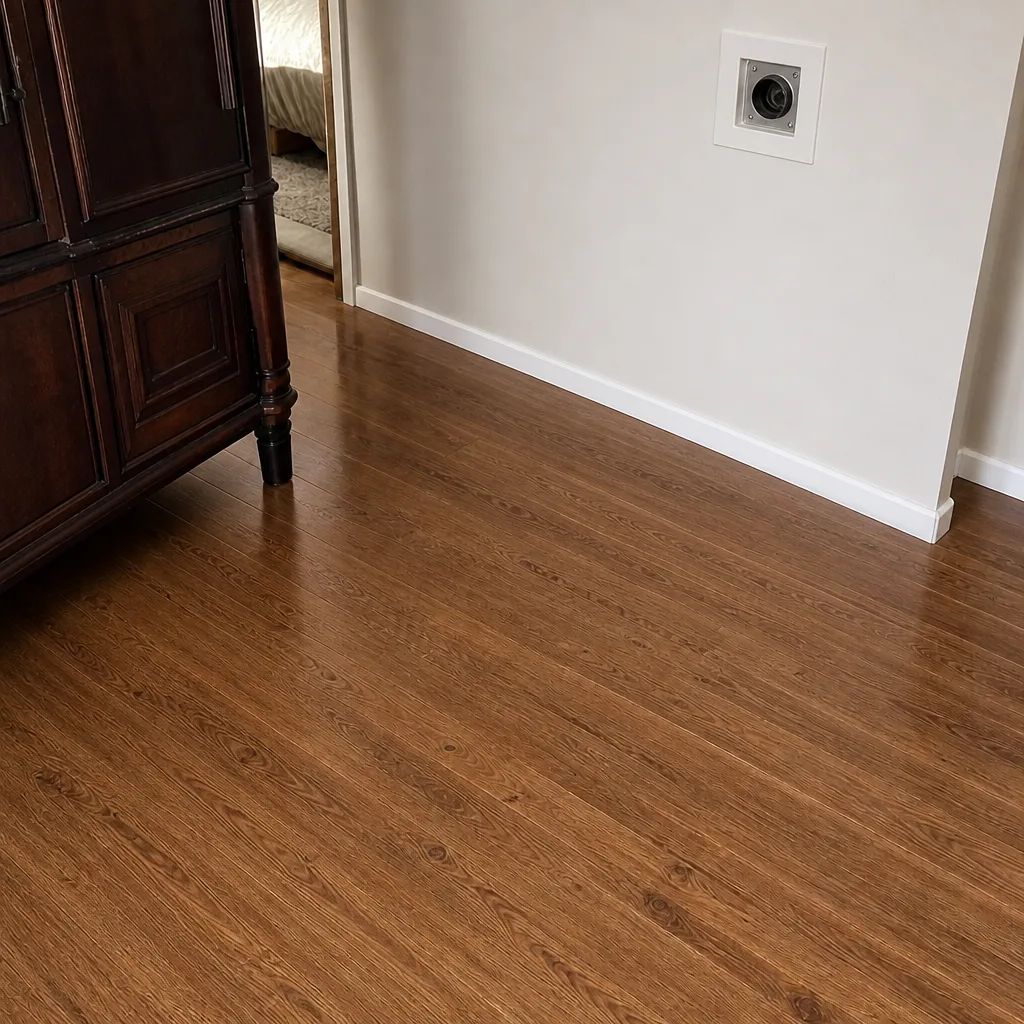 After
When to Call a Professional
Call a professional when the problem is inside the duct network rather than on its surface, when there’s been a moisture, rodent, or smoke event, when you’ve seen dust blowing from a register, or when you’ve had a system repair or renovation that may have left debris behind. Call if your system has a possible leak, if you’re installing or troubleshooting a Honeywell or Aprilaire whole-home air quality system, or if you simply want a documented process with before-and-after photos rather than a promise. Call if you’ve had a previous DIY attempt that left you with a bigger problem. Duct Cleaning Reno offers free estimates in Reno, and the written estimate sets the final price. We answer 24/7 at (866) 361-7643, with fast dispatch from 7am to 7pm.
Frequently Asked Questions
For surface-level maintenance, yes, and it’s worth doing: vacuum registers, clean filter housings, and reach a few inches into accessible openings. For the interior of the duct network, no, and the reason is containment. A shop vac with a standard filter doesn’t capture fine particulate and doesn’t create negative pressure in the system, so you’re agitating debris into the room and deeper into the ducts. If you want the interior genuinely cleaned, call (866) 361-7643 for an exact quote; estimates are free.
Pricing is per job by written estimate, and the estimate is free. What you should be clear on is what a quote represents: a whole-system price agreed before work starts, not a per-vent teaser. If a caller’s quote starts with a low figure that changes once the technician arrives, that’s a pricing model problem, not a market price. Call (866) 361-7643 for an exact quote on your system and ask for it in writing.
Cheaper quotes usually reflect a lower scope of work: a shop vac, a hand tool, or a truck-mounted unit without HEPA-rated capture or negative-air containment. The equipment determines what’s actually possible, and a low price rarely covers the full three-part process. Our process uses Rotobrush brushing, Nikro HEPA extraction, and Abatement Technologies containment, which isn’t the equipment set behind an unusually low quote. Call (866) 361-7643 and ask exactly what equipment the crew will use; that answer tells you what the price is buying.
Ask for before-and-after photos of your own ducts. A documented process produces a record, and a process you can’t inspect is a promise. Ask, too, what equipment will be used and whether containment is included. We photograph before and after, and we walk through what we found. Call (866) 361-7643 to talk through the process for your system.
There’s no single interval that fits every home, but high-desert dust, wildfire smoke events, and long heating seasons push Reno systems toward the shorter end. More important than a calendar is condition: a system that shows dust blowing from registers, a musty smell, or post-renovation debris needs evaluation regardless of timing. Homes with pets, allergy concerns, or recent smoke exposure tend to need it more often. Call (866) 361-7643 and describe your situation for a specific recommendation.
Yes, and it’s a fire-safety service, not a maintenance nicety. Lint buildup is the leading cause of dryer fires, and the risk lives inside the vent line, not on the exterior hood you can clean yourself. A full vent-line clearance requires equipment a homeowner doesn’t have. Call (866) 361-7643 to schedule it and ask about clearing the full line.
Yes. Air Duct Repair is part of what we do, and it happens on the same visit when we find a problem. Leaking or damaged ductwork re-contaminates a clean system quickly, so cleaning without addressing a known leak is a temporary fix. Call (866) 361-7643 and mention the symptom you’ve noticed.
The Bottom Line
The DIY vs professional line for duct cleaning isn’t about convenience or marketing. It’s defined by whether agitation happens under simultaneous HEPA containment. For surface tasks you can see and reach, DIY is a reasonable and worthwhile habit. For the interior of the duct network, and for any mold, rodent, or smoke situation, the physics require professional equipment and the risk of DIY is real. A shop vac with a standard filter doesn’t capture fine particulate, doesn’t create negative pressure, and can turn a dust problem into a spread problem. If you want to know what’s actually happening in your ducts and how to fix it, including repair of what we find, Reno homeowners can reach us for a free estimate and a written price before work begins. Our technicians have up to 15 years of experience. Call (866) 361-7643. We answer 24/7. Fast dispatch from 7am to 7pm, Sunday through Friday.
Written by the team at Duct Cleaning Reno.