
Last updated November 15, 2026
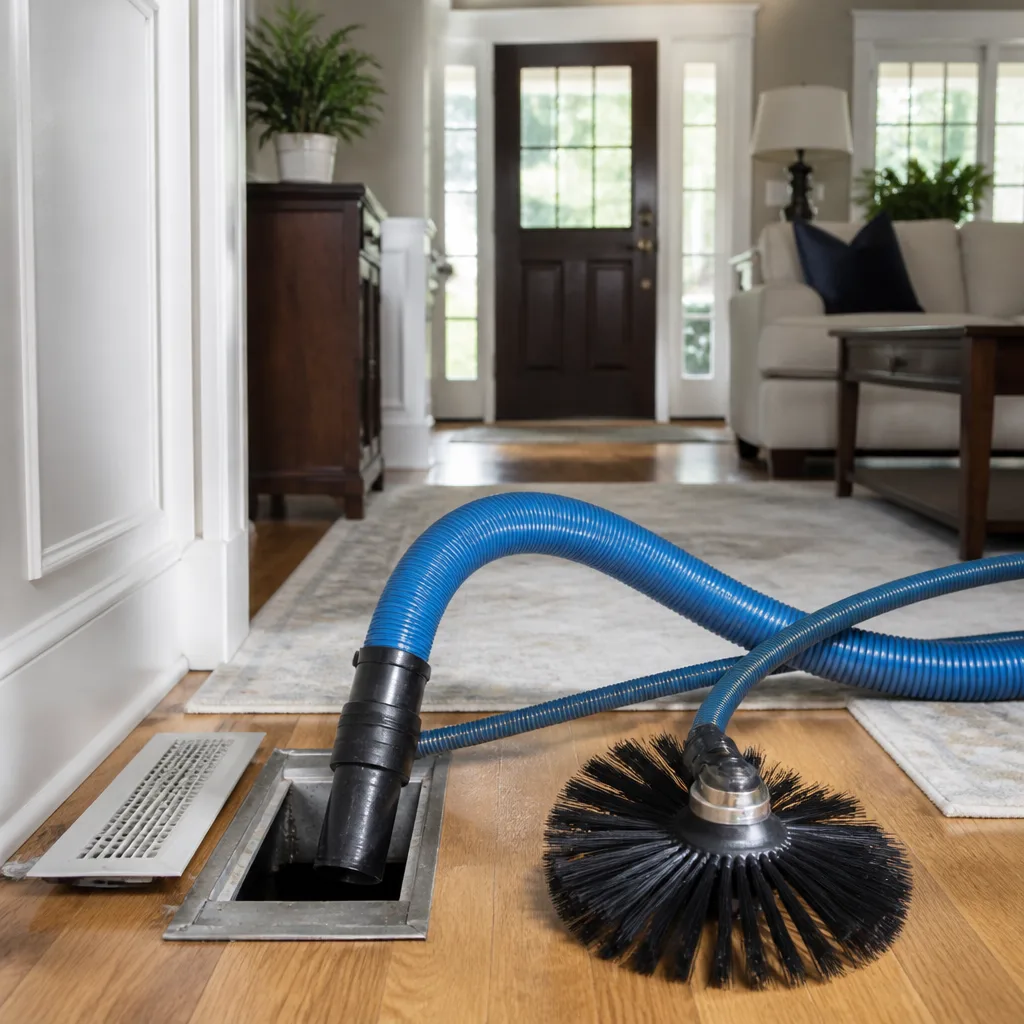 Whole-home duct cleaning
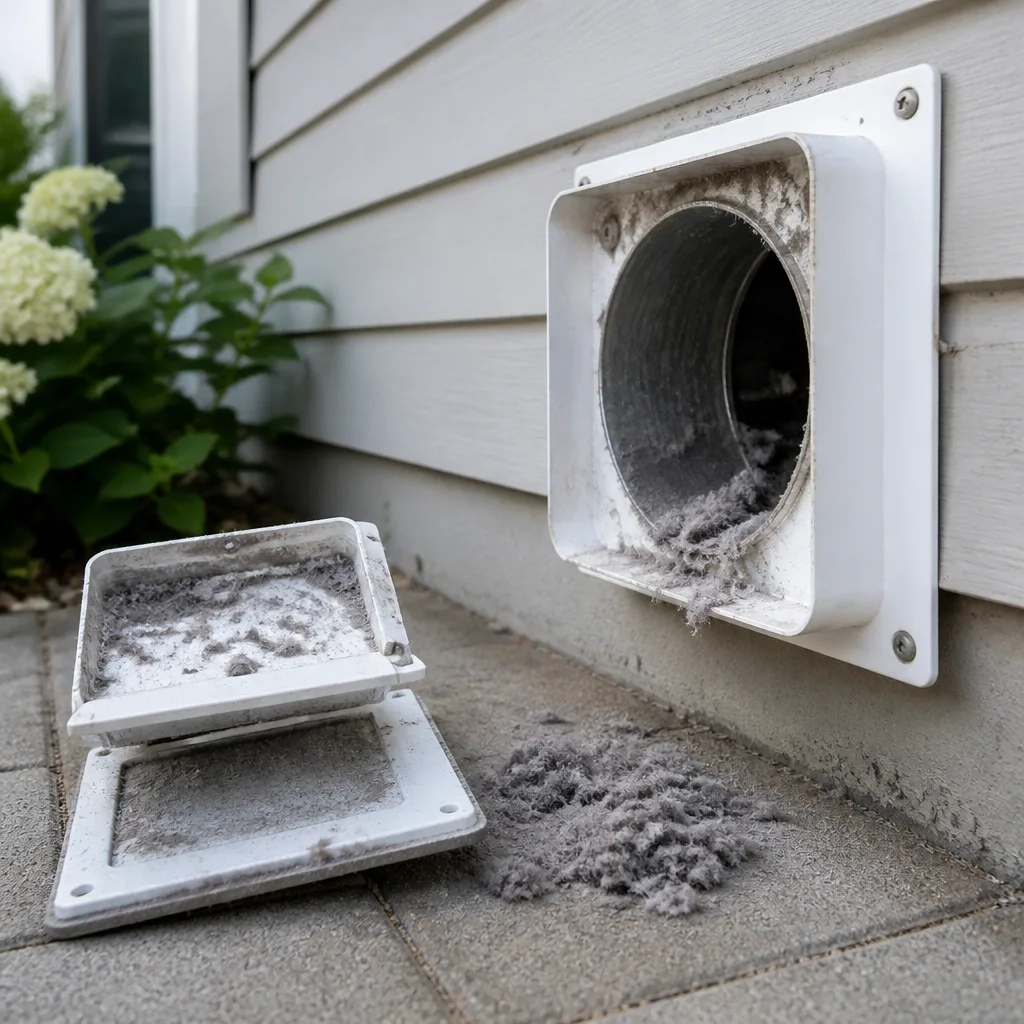 Dryer vent cleaning
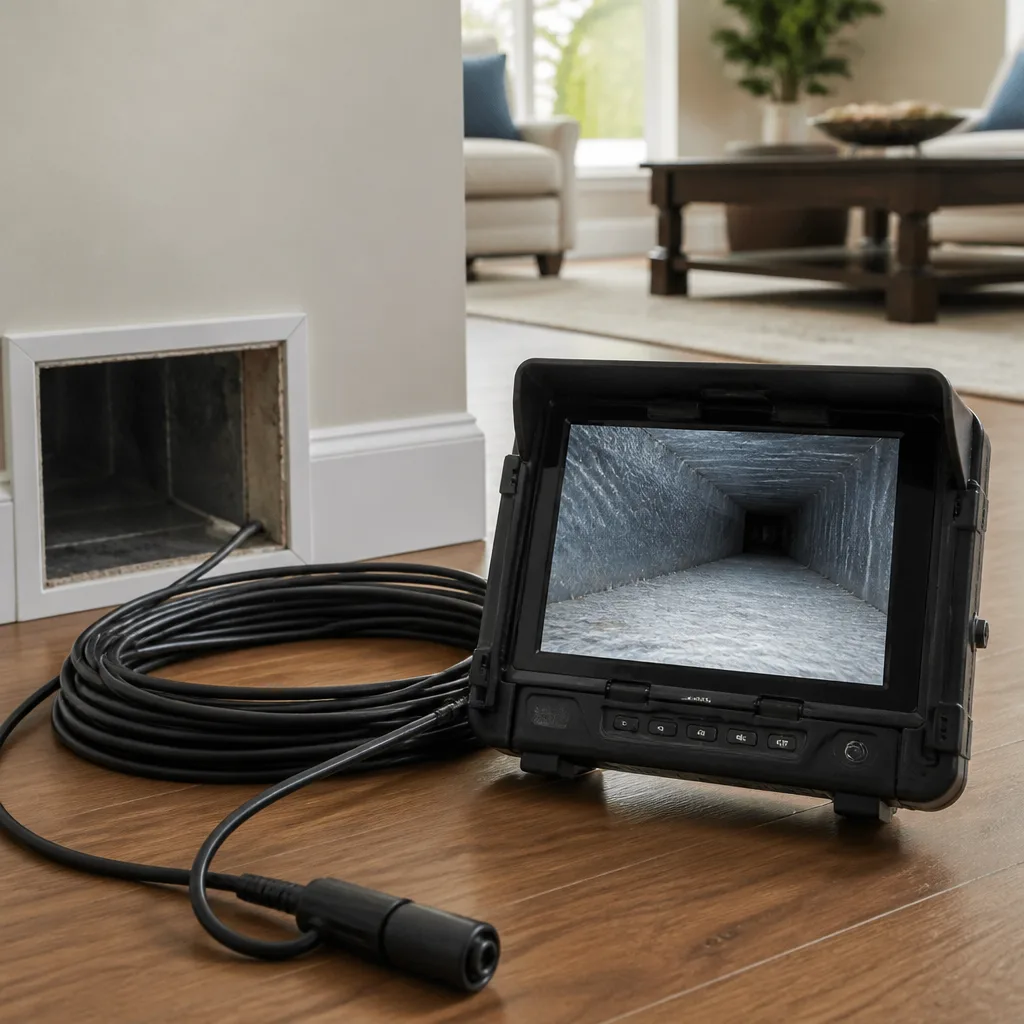 Camera inspection
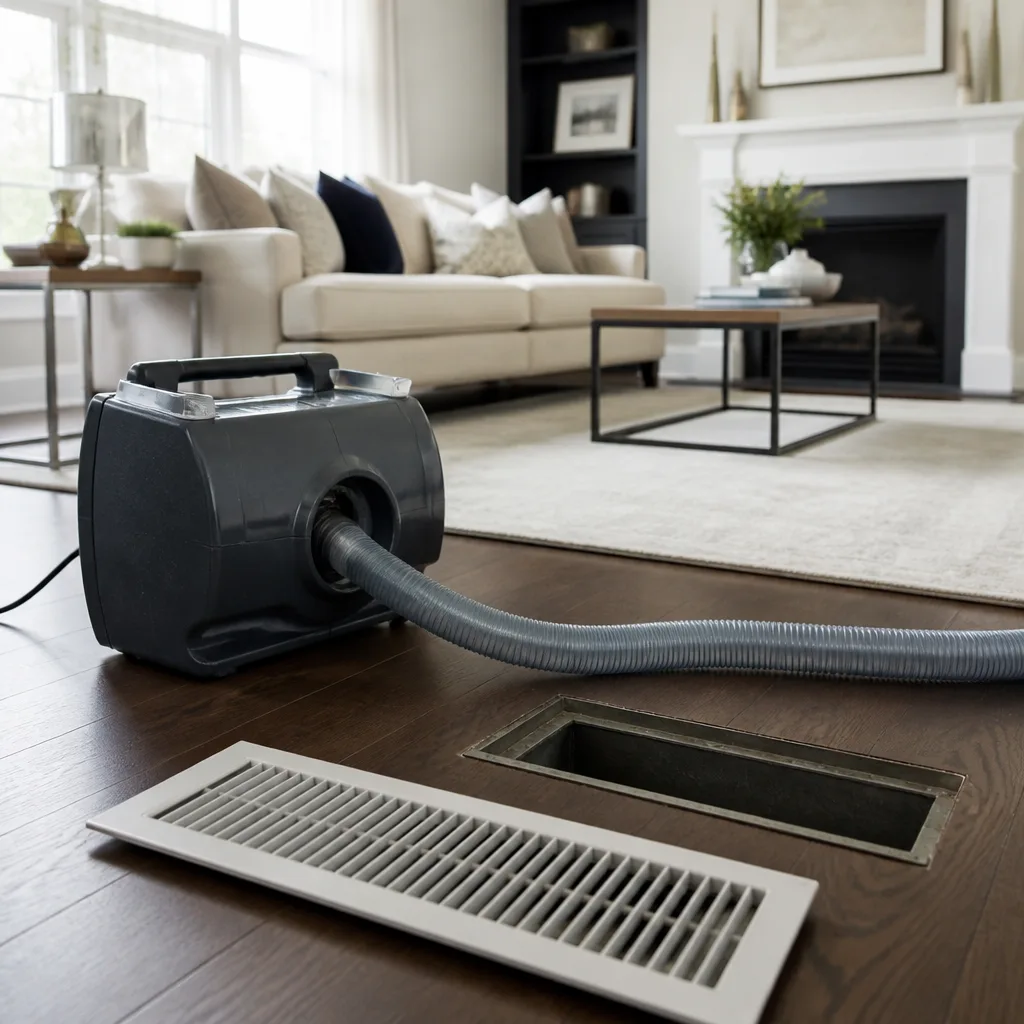 Sanitizing & deodorizing
Whole-system duct and dryer vent check with before-and-after photos - you see exactly what came out of your vents
That "$99 whole-house special" is a bait ad - the real number appears once they are in your hallway, or the "clean" is a shop-vac at the register. We photograph the inside of your ducts before and after instead.
The Complete Guide to Air Duct Cleaning in Reno
Most duct cleaning guides are written for humid, coastal climates. Reno isn’t that. This city sits at roughly 4,500 feet in a high desert basin where fine particulate rides the wind most of the year, wildfire smoke settles into the valley for weeks at a stretch, and heating and cooling systems cycle harder between temperature extremes than systems in milder places ever do. That combination loads ductwork differently than the generic advice you’ll find online, and it’s why a shop-vac-and-a-promise approach leaves most of the problem behind. This guide explains what actually accumulates inside Reno ducts, why extraction equipment matters, and how to tell whether a cleaning was done right.
Quick Answer
Air duct cleaning in Reno means removing accumulated dust, alkali particulate, and smoke residue from the entire forced-air system, not just the registers you can see. A proper job uses mechanical agitation to dislodge debris and HEPA-rated extraction under negative pressure to capture it, so contamination doesn’t migrate into your living space. In Reno’s high desert climate, most homes benefit from an assessment every few years, sooner if you’ve been through a heavy smoke season or a remodel.
Styles & brands we work with
- Whole-home duct cleaning
- Dryer vent cleaning
- Camera inspection
- Sanitizing & deodorizing
Table of Contents
- Why Reno’s Climate Makes Duct Cleaning Different
- What Actually Accumulates Inside Reno Ductwork
- The Equipment Difference: HEPA Extraction vs. Portable Vacuums
- What Rotobrush Agitation Does That Other Methods Don’t
- How to Verify a Cleaning Was Complete
- When Cleaning Crosses Into Duct Repair
- Dryer Vents: A Fire Risk, Not a Maintenance Afterthought
- Common Mistakes to Avoid
Why Reno’s Climate Makes Duct Cleaning Different
Reno sits in a basin, and basins trap things. Fine desert particulate, the kind that comes off dry ground and open lots, gets pulled into homes through every gap in the building envelope and then cycles through the HVAC system instead of settling out. Add the smoke that drifts into the Truckee Meadows during fire season and you have two distinct contamination streams most homes are dealing with at once: mineral dust that’s heavy and abrasive, and combustion particulate that’s light enough to stay airborne and coat every surface it touches.
Then there’s the cycling. Reno homes swing between heating season and cooling season with real temperature spread on either end. A system that runs hard, shuts off, and runs hard again moves more air through the ductwork than one that hums along at a steady load. More airflow means more particulate carried into the supply and return runs, and more opportunity for it to drop out of the airstream where the duct changes direction or narrows.
What this means practically:
- Dust doesn’t stay evenly distributed. It concentrates at elbows, takeoffs, and the last few feet before registers.
- Smoke residue bonds to the inside of duct walls rather than blowing through cleanly, so simple airflow doesn’t clear it.
- Homes near open ground, construction, or the edges of the valley floor accumulate mineral dust faster than homes tucked into tree cover.
Generic advice written for a damp climate assumes moisture is the main culprit. In Reno, it’s dry particulate and smoke, and that calls for mechanical agitation plus true HEPA capture. If you want the parent overview of how we approach the work itself, start with duct cleaning Reno.
What Actually Accumulates Inside Reno Ductwork
Pull a register cover in a Reno home that hasn’t been serviced and you’ll usually find a mix rather than a single offender. Understanding the mix tells you why some cleaning methods fail.
Alkali dust and mineral particulate. This is the fine, powdery material that comes off desert ground. It’s heavier than household lint, so it drops out of the airstream at transitions and builds up in layers. It’s also mildly abrasive, which matters for the blower and for the seams where duct sections join.
Wildfire smoke residue. During a smoke event, the particles small enough to matter are the ones that travel deepest into the system. They don’t just pass through. They deposit on duct walls as a fine film that ordinary airflow doesn’t lift. That film is one of the main reasons a home can smell faintly of smoke long after the sky clears.
Construction and remodel debris. Drywall dust, sawdust, and insulation fibers get into ductwork during renovations and stay there. This is common in Reno’s newer build areas and in older homes that have been updated.
Pet hair, lint, and biological material. Standard household accumulation, but it acts as a binder. Hair and lint trap the finer particulate and hold it against duct surfaces, which is why agitation matters as much as suction.
Each of these behaves differently. Lint lifts easily. Alkali dust needs mechanical disruption. Smoke film needs contact and agitation to break its bond with the duct wall. A method that only blows air through the system addresses none of them fully. Our team at air duct cleaning builds the process around all four types at once.
The Equipment Difference: HEPA Extraction vs. Portable Vacuums
This is where most residential duct cleaning diverges, and it’s worth understanding before you hire anyone. A portable shop-style vacuum can pull loose dust from a register, but it can’t capture the particles that matter most, and it doesn’t contain what it disturbs. Here’s exactly what happens during a cleaning done with professional extraction:
- Containment is set first. Negative-air equipment, the same class of tools used in commercial mold and asbestos abatement, pulls the work area into negative pressure so disturbed contaminants move toward the machine instead of into your rooms.
- Extraction runs throughout. Nikro HEPA-rated vacuum systems capture particles down to 0.3 microns, not just the visible dust. That’s the difference between removing contamination and redistributing it.
- Agitation breaks the bond. Debris that’s stuck to duct walls gets mechanically dislodged so the extraction can actually reach it. More on that in the next section.
- The system is checked before the equipment comes down. Registers, plenums, and accessible runs get inspected, and the containment stays up until the work is verified.
Why does this matter for Reno specifically? Because the fine mineral dust and smoke particulate here are exactly the size range a cheap vacuum misses. A portable unit filters out what you can see and recirculates what you can’t. When you’re hiring, ask what extraction equipment will be on site and whether it’s HEPA-rated. If the answer is vague, that tells you something.
We also work with Honeywell and Aprilaire whole-home air quality systems, which means we understand how ductwork connects to filtration and humidity control rather than treating the ducts in isolation. A cleaning that ignores the filtration side of the system is only half a job.
What Rotobrush Agitation Does That Other Methods Don’t
There’s a persistent myth that duct cleaning is mostly about suction. It isn’t. Suction removes what’s already loose. The bulk of the contamination in a Reno duct system is adhered to surfaces, and something has to break that adhesion first.
Rotobrush is the industry-standard mechanical brush system, and what it does is genuine agitation. A rotating brush travels the length of the duct run, physically scrubbing the walls and lifting the layer of bonded dust, lint, and smoke film into the airstream where the HEPA extraction can capture it.
Compare that with the alternatives you’ll see quoted around town:
- Compressed air alone blows debris loose but sends it somewhere. Without containment and capture, “somewhere” is often your living room.
- Brush-only methods without rotation contact the surface but don’t scrub it, so bonded material stays put.
- Air-whip cleaning can work in commercial settings with strong containment, but in a residential system it’s often paired with underpowered vacuums that can’t keep up.
Agitation and extraction have to work together. Rotobrush dislodges; Nikro captures. One without the other is a partial job. This pairing is the core of how we approach dryer vent cleaning as well, where lint bonds to vent walls the same way dust bonds to duct walls.
How to Verify a Cleaning Was Complete
You’re paying for a process, so you should be able to confirm the process happened. Here’s how to check a forced-air system cleaning in a Nevada home, and what to look for at each stage:
- Ask for before-and-after photos of your own system. Not stock images. Photos of your registers, your plenum, your accessible duct runs. A contractor who documents the work has nothing to hide.
- Look inside a register or two yourself. After the job, pull a supply register cover and check the inside of the boot and the first section of duct. It should be visibly clean, not just less dusty.
- Check the return side. The return plenum and the area around the blower are where a lot of debris collects. Ask whether they were cleaned and inspected.
- Confirm the containment was used. Ask what negative-air equipment was on site. If the answer is a shop vacuum, the containment conversation didn’t happen.
- Note any changes in airflow or smell. A complete cleaning should leave the system moving air the way it should and shouldn’t leave a lingering smoke or dust odor. If it does, something was missed.
- Get the findings in writing. If anything was flagged during inspection, you want it documented so you know what to address next.
One more checkpoint specific to Reno homes: ask about the filter and the filtration system. A cleaning paired with a fresh filter and a check of your air quality setup, whether that’s a Honeywell or Aprilaire system, extends the results well beyond the day of service. We can also apply Guardsman-grade protective treatment after cleaning to add a defensive layer against future buildup.
When Cleaning Crosses Into Duct Repair
Sometimes the inspection turns up something cleaning alone won’t fix. Duct repair is part of our service menu for exactly this reason, and we repair what we find rather than flagging it and leaving it for another contractor.
What gets found inside ducts that cleaning won’t solve:
- Disconnected or separated joints. Sections that have pulled apart at seams leak conditioned air into wall cavities and attics while pulling unconditioned air, and whatever’s in it, into the system.
- Crushed or collapsed flex duct. Common in tight attic runs, and it chokes airflow while trapping debris at the pinch point.
- Torn or deteriorated duct insulation. The inner lining fails and becomes part of what’s circulating through your home.
- Improperly sealed plenums and takeoffs. Gaps at the connections leak air and let contamination in at the source.
If you’ve had a cleaning and the dust returns quickly, or your energy bills climb while airflow drops, the ducts may be leaking rather than dirty. Cleaning dirty ducts that leak just means they’ll be dirty again soon. Fixing the leak first is the right order. This is why we treat repair as an in-scope part of the work rather than an upsell. For a broader look at our local approach, the Reno service page covers what we typically encounter in area homes.
Dryer Vents: A Fire Risk, Not a Maintenance Afterthought
Dryer vent cleaning gets sold as an add-on in a lot of places, which undersells what it actually is. Lint buildup in a dryer vent is a genuine fire risk, and the vent line is the part of the system homeowners almost never see. When lint restricts airflow, the dryer runs hotter than it should, and the conditions for a fire exist inside a wall cavity where nobody’s watching.
We treat it as a dedicated fire-safety service, which means full vent-line clearance rather than a quick pass at the exterior hood. The work includes clearing the line from the dryer connection to the exterior termination, checking for crushed or disconnected sections, and confirming the damper opens and closes properly. In Reno’s dry climate, lint gets brittle and packs tightly, so a partial clearing doesn’t do much.
If you haven’t had the vent line looked at since you moved in, or if your dryer takes noticeably longer to finish a load than it used to, that’s your signal. It’s a short service with real consequences attached to skipping it.
Common Mistakes to Avoid
- Hiring on price alone. A low bid usually means a shop vacuum and no containment, which disturbs more than it removes. The cheap job often ends up costing more when you have to have it done properly.
- Skipping the return side. Cleaning only the supply registers leaves the return plenum and blower area untouched, which is where a lot of the debris actually collects.
- Assuming a remodel cleanup happened. Drywall dust and construction debris settle into ductwork during renovations in Reno’s busier build areas, and standard cleaning won’t address it unless it’s specifically part of the job.
- Ignoring leaks to save a step. Cleaning leaking ducts means they’ll be dirty again soon. Repair and cleaning belong in the same conversation.
- Not asking what equipment will be used. If nobody can tell you what extraction and containment gear shows up, assume the answer is “not much.” Ask specifically about HEPA-rated vacuums and negative-air containment.
- Skipping the dryer vent. It’s the one part of the system where neglect carries fire risk, and it’s the part most people never think about.
- Forgetting the filtration side. If your home has a whole-home air quality system, whether a Honeywell or Aprilaire setup, the ducts don’t function in isolation. Cleaning without checking the filtration side leaves the system out of balance.
See the difference
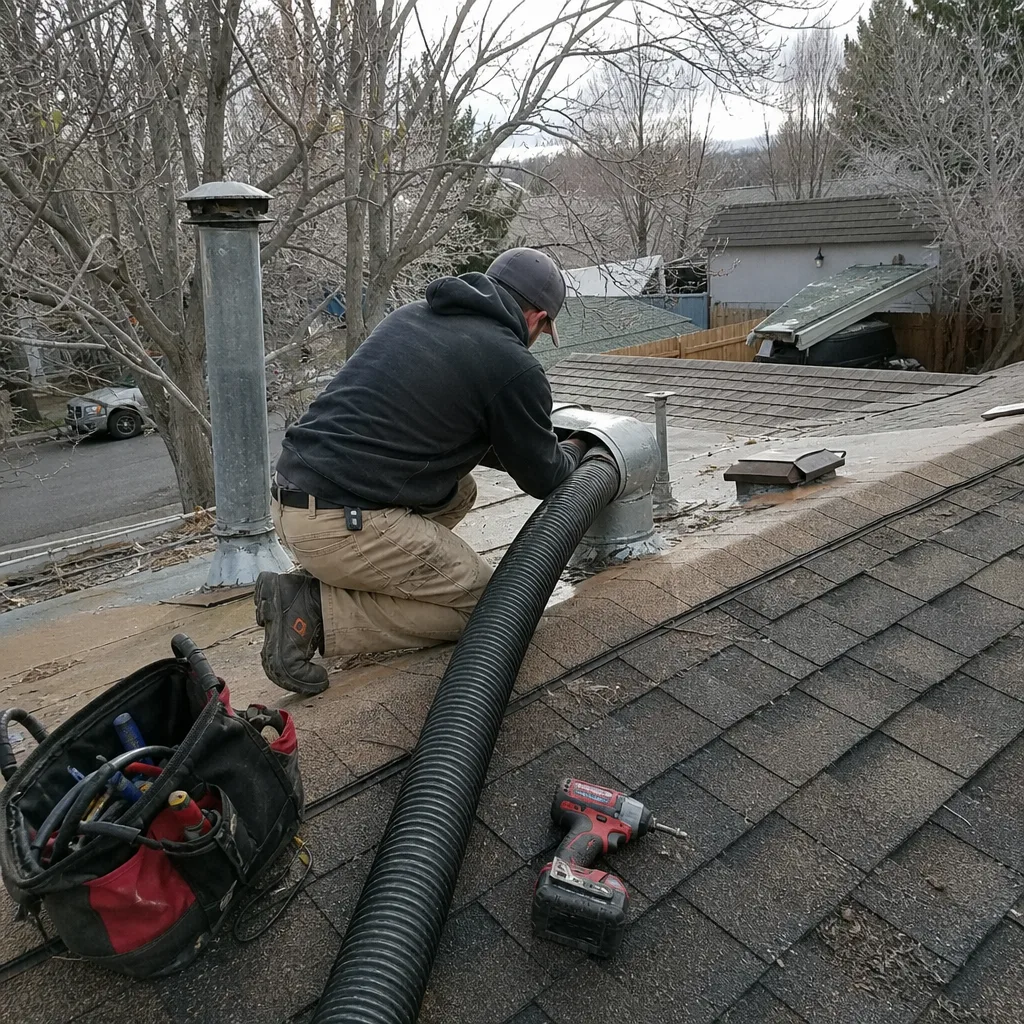 Before
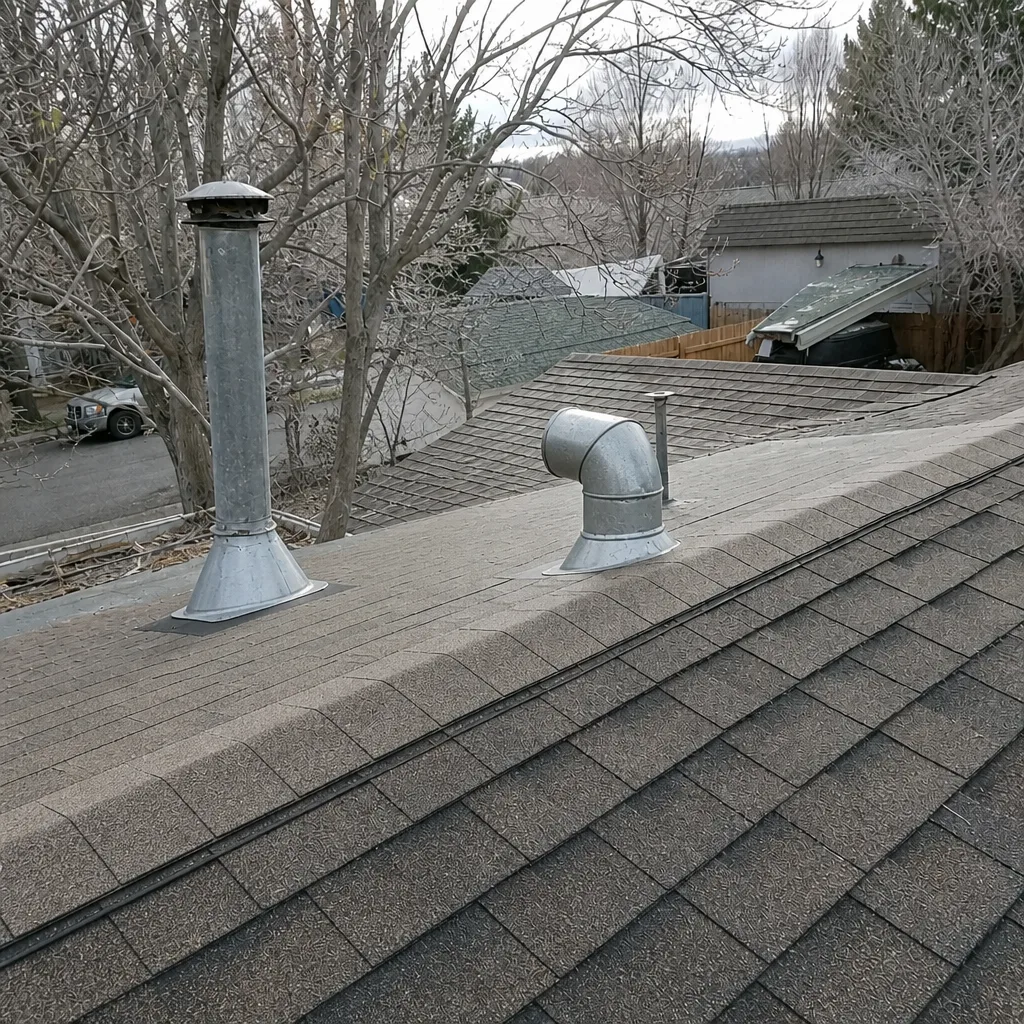 After
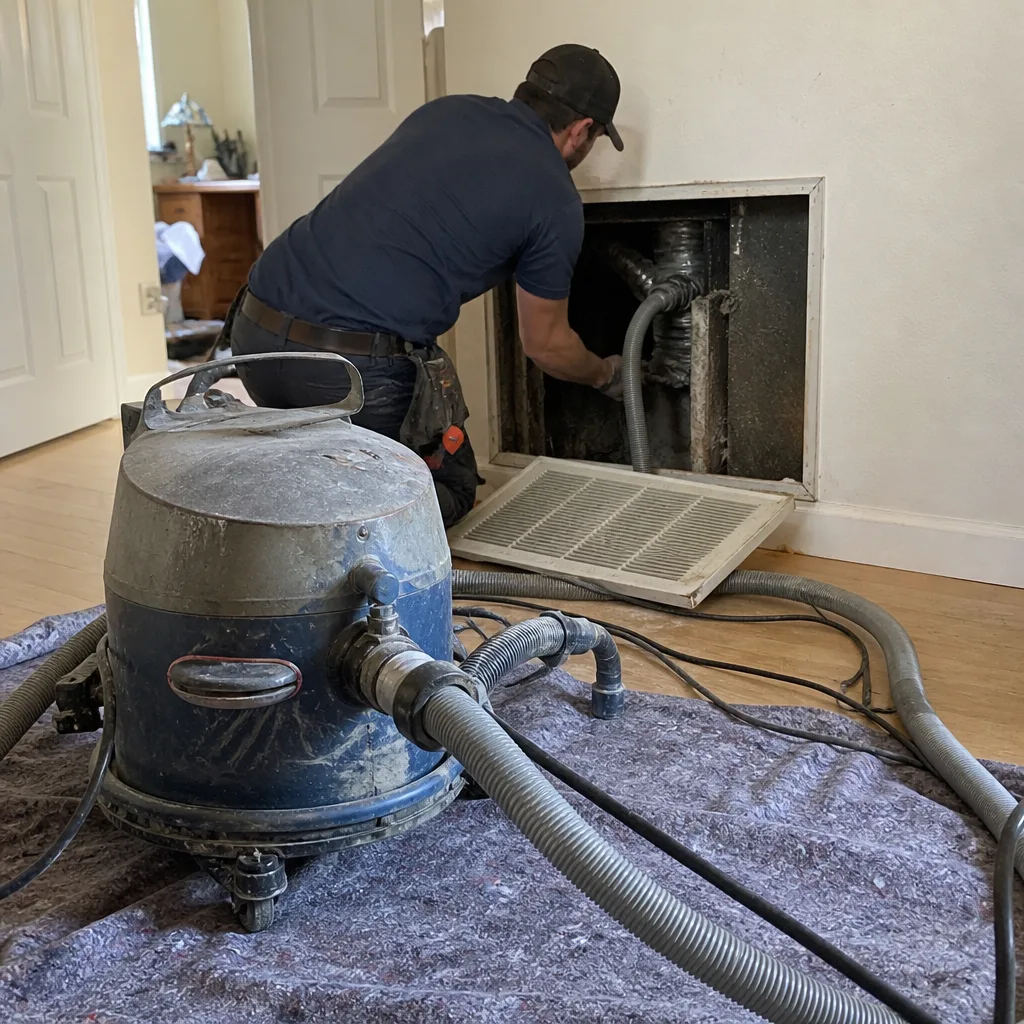 Before
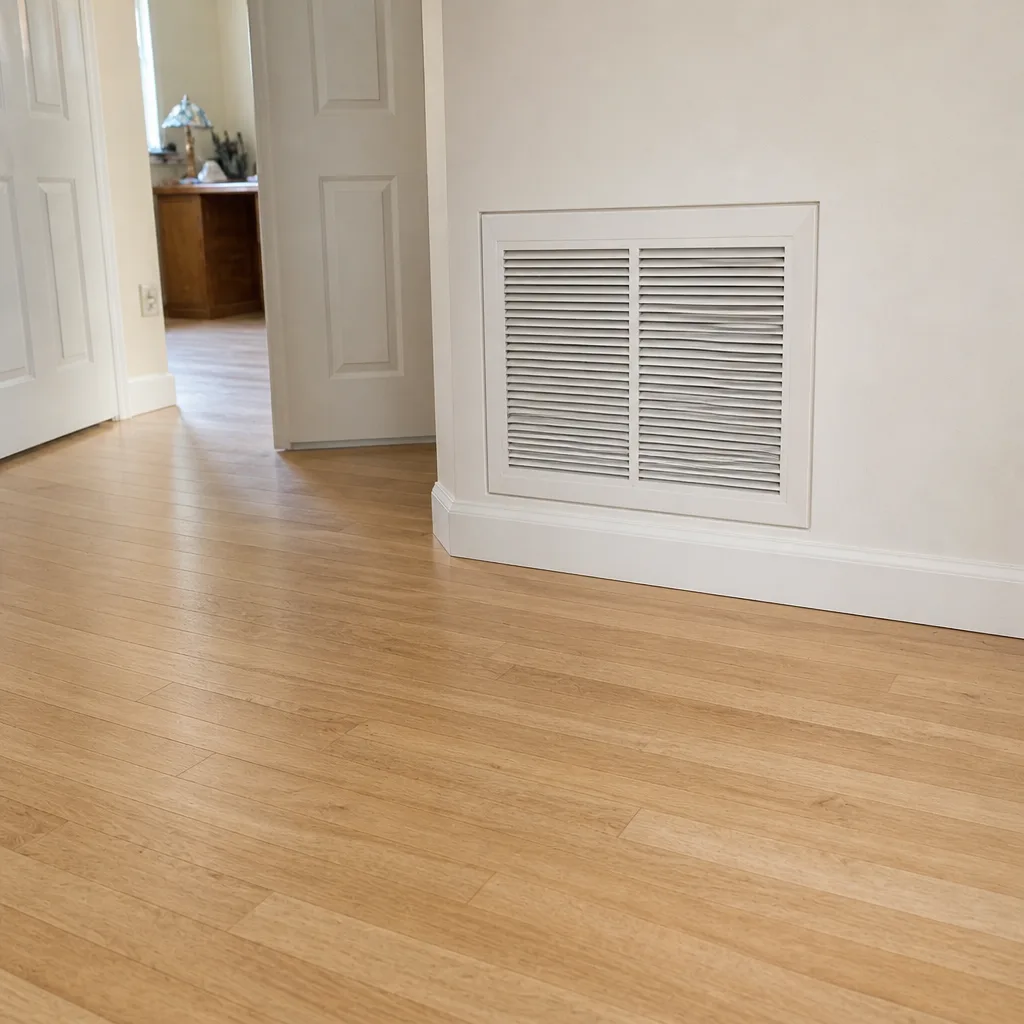 After
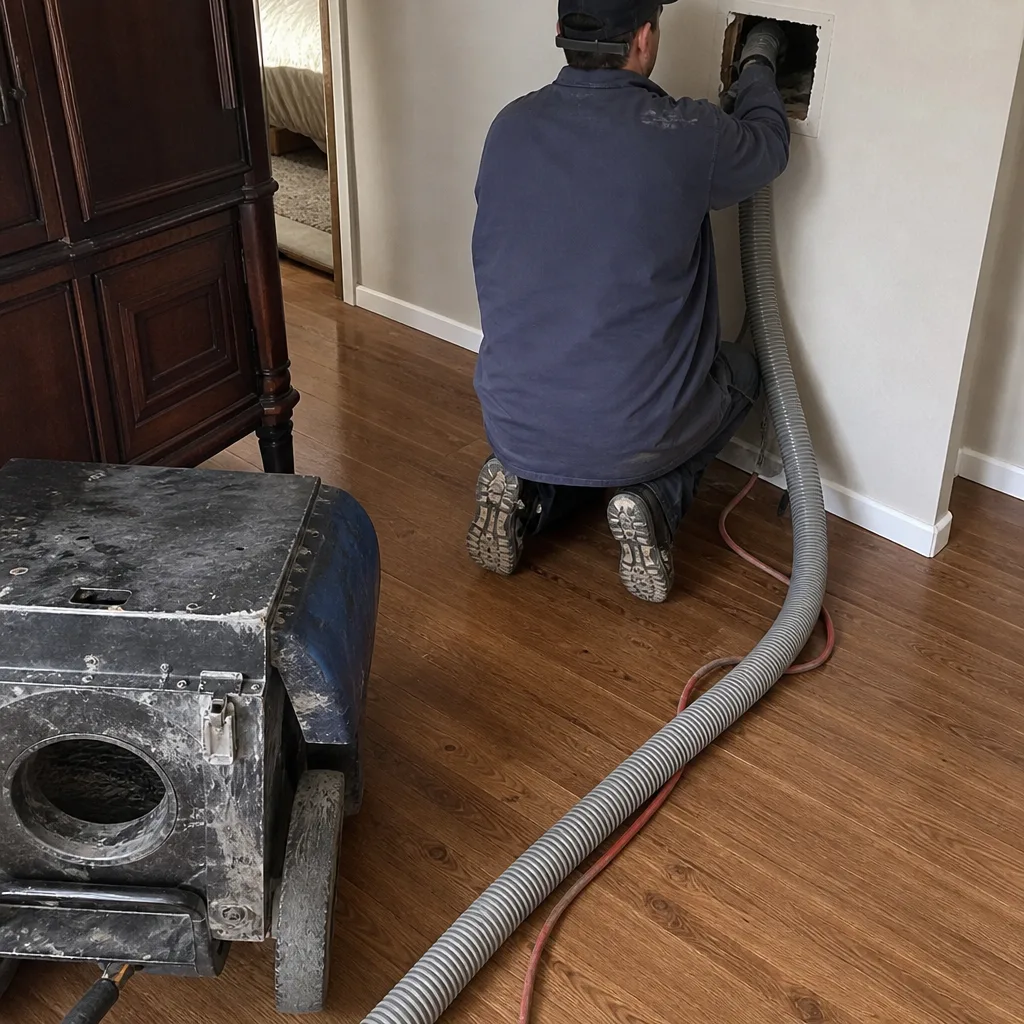 Before
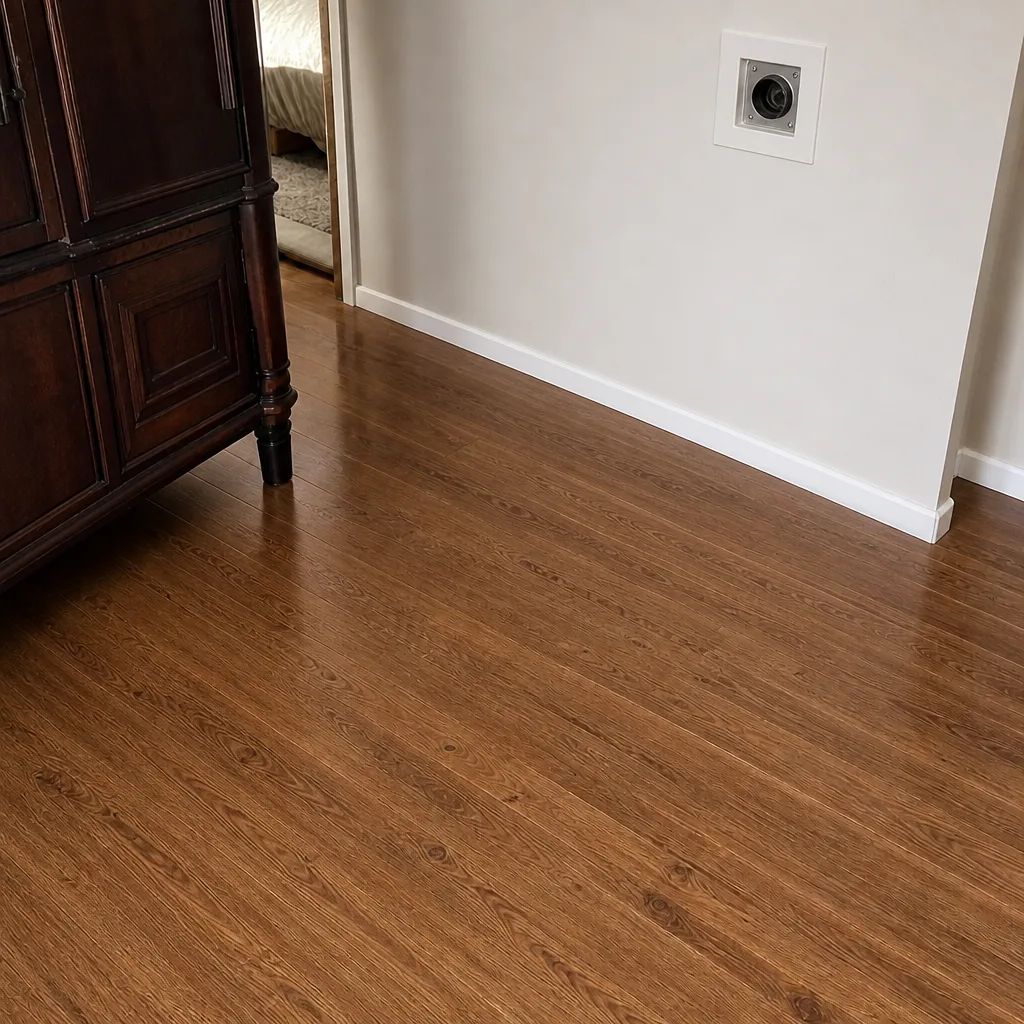 After
When to Call a Professional
Some signs you can address yourself with a filter change and a register wipe-down. Others mean it’s time to call. If you’ve been through a heavy smoke season and the house still smells faintly of it, if you’ve finished a remodel and want the ductwork cleared before you settle in, if you notice visible dust blowing from registers when the system kicks on, or if your dryer takes longer than it used to, those are the moments to stop guessing. Persistent musty or smoky odors, uneven airflow between rooms, and unexplained increases in dust on surfaces all point to a system that needs a proper look. Duct Cleaning Reno offers free estimates in Reno, call (866) 361-7643. We answer 24/7. Fast dispatch from 7am to 7pm, Sunday through Friday.
Frequently Asked Questions
Most Reno homes should have the system assessed every three to five years, closer to every two if you’ve been through a significant smoke season, finished a remodel, or have pets. The high desert particulate load and wildfire smoke accelerate buildup compared to milder climates, so the general “every few years” guidance runs a bit tighter here. A free estimate will tell you what your specific system actually needs rather than guessing. Call (866) 361-7643 for an exact quote.
Duct cleaning is priced per system rather than per vent, and the only honest number is the one on your written estimate after we’ve looked at the system. Factors that affect the quote include the number of systems, how much line is accessible, the contamination level, and whether repair work is needed. What we won’t do is quote a low teaser number and expand it once the technician is on site. The price is set by the written estimate before work starts. Call (866) 361-7643 for a free estimate.
HEPA-rated extraction captures particles down to 0.3 microns, while a standard shop vacuum filters out what you can see and recirculates the fine particulate back into the air. In Reno’s climate, the fine mineral dust and smoke particles are exactly the size range a shop vacuum misses. That’s the core reason the equipment question matters more than the price question.
Cleaning removes accumulated dust, smoke residue, and biological material from the system, which reduces what gets circulated into your living space. We frame that as a process-based benefit rather than a medical guarantee. If a home has a heavy smoke film inside the ducts, cleaning plus proper agitation is what addresses it. Call (866) 361-7643 if you’re trying to figure out whether your system is the source.
Yes, dryer vent cleaning is a core service, treated as a fire-safety job rather than an add-on. Lint buildup is a leading cause of dryer fires, and the vent line is the part of the system most homeowners never see. We clear the full line from the dryer connection to the exterior termination and check the damper and any crushed sections along the way. Call (866) 361-7643 to schedule.
We repair what we find. Duct repair is in scope, so separated joints, crushed flex runs, and damaged insulation get addressed in the same visit rather than flagged and left for another contractor. Cleaning around a leak just means the ducts get dirty again. A free estimate is the best way to know what your system needs before work begins.
The Bottom Line
Reno’s high desert climate loads ductwork in ways generic cleaning advice doesn’t account for. Alkali dust, wildfire smoke film, and heavy HVAC cycling mean contamination bonds to duct surfaces and accumulates at transitions rather than blowing through cleanly. The method matters more than the price. Mechanical agitation with Rotobrush, HEPA-rated extraction with Nikro, and negative-air containment with Abatement Technologies equipment are what separate a real cleaning from a vacuum pass. Verify the job with photos and your own check of a register or two. If the inspection finds leaks or damage, fix them. And don’t skip the dryer vent. Our technicians have up to 15 years of experience, we’re licensed and insured, and we price one flat price per system agreed before work starts. Call (866) 361-7643 for a free estimate. We answer 24/7, with fast dispatch from 7am to 7pm, Sunday through Friday.
Written by the team at Duct Cleaning Reno.