
Emergency Air Duct Cleaning Near Me: What Reno Homeowners Should Do First
If you’ve found evidence of rodents in your ductwork and your first call is to a duct cleaner, you may be about to aerosolize contaminated material through your home. That situation requires a specific containment protocol before any airflow moves through the system. Most calls that come in as “duct emergencies” in Reno aren’t cleaning problems first. They’re containment and assessment problems first, and getting the order wrong can make things worse. Here’s the correct sequence.
If you’d rather not sort through it alone, call (866) 361-7643. We answer 24/7. Fast dispatch from 7am to 7pm, Sunday through Friday.
What counts as a real duct emergency in Reno?
Three situations genuinely qualify. Wildfire smoke pulling into the system during a summer smoke event, rodents getting into the duct runs, and sewage or flood odor moving through the supply side. Everything else, including a dusty register or an AC that smells faintly musty, is a scheduling matter, not an emergency. Knowing which one you’re dealing with tells you what to do in the next ten minutes.
- Wildfire smoke infiltration: the smell arrives fast and settles into porous duct lining. Reno sits in a bowl where smoke from surrounding fires can pool for days, so this is the most common one we hear about.
- Rodent intrusion: droppings, nesting material, or scratching sounds in the walls near a register. This one carries a real health risk and needs containment before anything else.
- Sewage or flood odor in the ducts: usually a moisture source feeding the system. Cleaning without finding the source is money spent twice.
Why turning your HVAC off is step one (almost every time)
Shut the system down at the thermostat. A running air handler is a distribution engine, and whatever is in the ducts is getting pushed through every room within minutes. For smoke, that means coating surfaces with fine particulate. For rodent contamination, it means moving material you don’t want airborne. For moisture odor, it means spreading the smell further.
There are a couple of exceptions. On a day well past 90 degrees, with an infant, an elderly resident, or someone with a heat-sensitive medical condition in the house, you may need cooling more than clean air. In that case, close the registers in the affected rooms and run the system, and get an assessment scheduled fast. The other exception is if the system is your only source of heat in a cold snap. The point isn’t dogma. It’s that airflow is the mechanism that spreads the problem, so you control airflow first and think second.
One more note that matters in Reno: during a smoke event, keep windows and doors closed before you touch the thermostat. Sealing the source is the first move. Cleaning comes after the smoke event passes, not during it.
What “containment protocol” actually means in practice
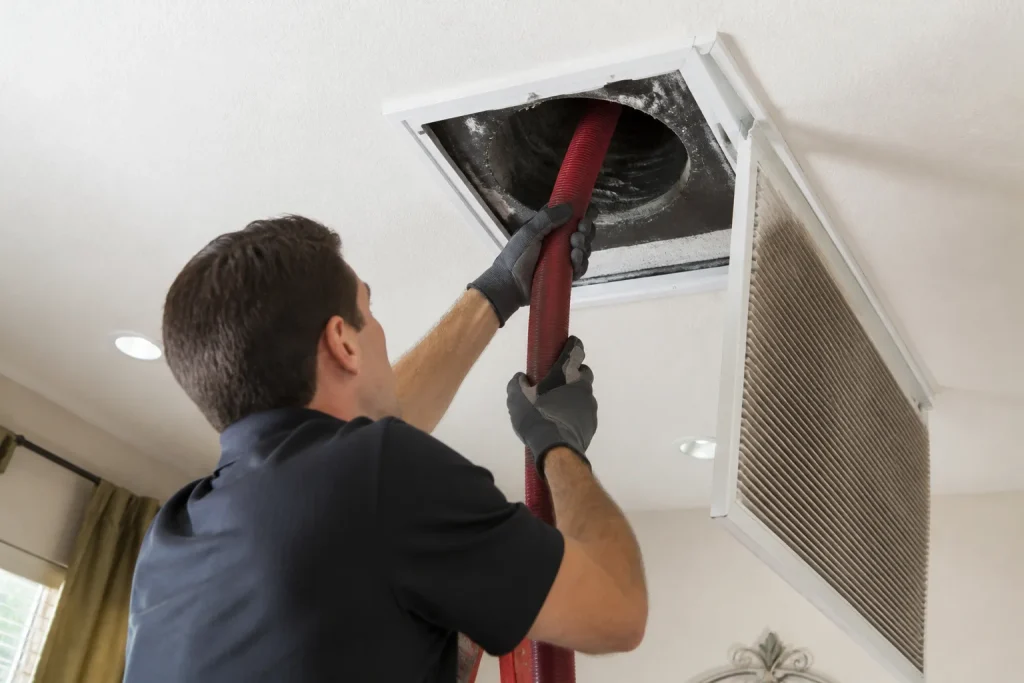
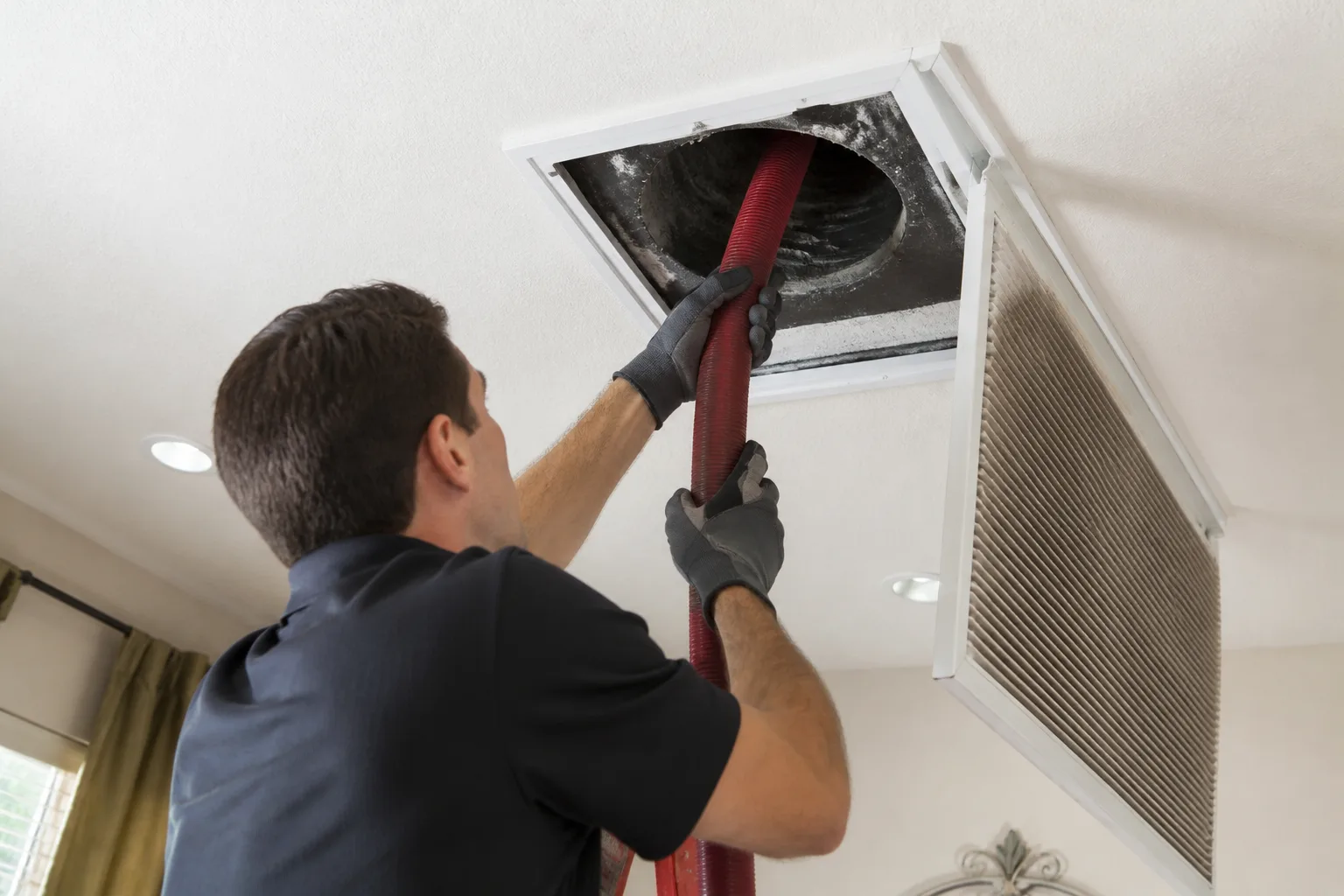
Containment means isolating the duct section being worked on so that dislodged material has nowhere to go but into a vacuum. A qualified contractor sets up negative air pressure in the work zone using equipment like Abatement Technologies negative-air machines, the same class of tools used in mold and asbestos abatement. That pressure keeps contaminants from migrating into living space while the work is happening.
Here’s what the sequence should look like:
- The technician assesses the duct layout, identifies the contamination source, and photographs it before any equipment runs.
- Registers and returns are sealed and the work zone is put under negative pressure.
- Rotobrush mechanical brushing agitates debris off the duct walls. Air whips and shop vacs don’t do this. Brushing contacts the surface.
- Nikro HEPA-rated extraction captures the loosened material. HEPA-rated filtration matters here because fine particulate is the part you can’t see.
- Damaged or leaking sections get repaired in the same visit. A leak in a return run is an open door for everything you’re trying to remove.
- A protective treatment such as Guardsman-grade application goes on after cleaning, adding a defensive layer on the duct interior.
- Before-and-after photos of your own ducts are handed over, not stock images.
The gap between this and what a low-bid operator typically does is enormous. A shop vac and a promise is not containment. If you want the fuller picture of the standard process, our air duct cleaning page walks through each system we use.
Why rodent intrusion is the one to slow down on
Rodent droppings and nesting material in ductwork can carry pathogens, and the wrong handling spreads them. That’s why the order of operations matters. Do not run the system. Do not vacuum the registers with a household vacuum, because most of them exhaust fine particulate right back into the room. Do not assume “a duct cleaning” covers it, because a standard cleaning performed on contaminated ducts without containment can scatter the material rather than remove it.
The correct first step is a containment assessment: identify every entry point the animals used, determine what’s actually in the duct runs, and confirm whether the contamination is confined to one section or spread through the system. Sealing the entry points is part of the job, not an optional add-on. Cleaning without sealing just invites the next round.
We’ll be blunt, because we’ve seen the aftermath. If the first contractor you call doesn’t ask about containment, entry points, and negative air before quoting, keep calling. If you’re property manager for a building with a shared system, get the assessment in writing before any technician touches a register.
Documenting the situation before anyone shows up
Take photos. Wide shots of the room, close shots of the register, and a shot of anything visible inside the duct if you can safely reach it with a flashlight. Note the date and time. If you can smell the problem, write down where in the house it’s strongest. This record helps with an insurance claim and it gives the contractor a starting point for the assessment.
On insurance: most homeowner policies treat sudden and accidental damage differently from long-term neglect. Whether a specific incident is covered depends on your policy, so call your agent and ask before you assume. A written scope of work, before-and-after photos, and a clear record of what was found and removed are the points a claim adjuster will typically want. Any contractor you hire should provide those records as a matter of course.
If the source of the odor or contamination is unclear, that’s when a professional assessment earns its keep. For Reno homes with older duct layouts, an assessment sometimes turns up a leaking joint nobody knew about. That’s a repair, and repairs happen in the same visit rather than being flagged for another contractor.
Emergency cleaning vs. standard cleaning marketed as urgent
The phrases are not interchangeable. A genuine emergency response is scoped on assessment, uses containment and remediation-grade equipment, and gets the problem documented. A standard cleaning with the word “emergency” attached to it is the same shop-vac-and-hope routine, just advertised more loudly. The difference shows up in the questions the dispatcher asks you on the phone.
Ask these before you book:
- “Do you use negative air containment, and what equipment?”
- “Are you set up for HEPA-rated extraction?”
- “Will you photograph the ducts before and after, and do I get the photos?”
- “Can you repair damaged ductwork in the same visit, or is that a separate trip?”
- “Is the price set per job from a written estimate before work starts?”
If the answers are vague, that’s your answer. The other thing to watch for is the cheap teaser price. A low quote that grows once the technician is onsite is the classic bait-and-switch, and it’s the reason we set one flat price per system before work starts, with no per-vent pricing. The written estimate is the final number.
One more thing Reno homeowners should know about dryer vents
Dryer vents are a fire risk, not a maintenance afterthought. Lint buildup in the vent line is a leading cause of dryer fires, and it’s a straightforward safety check rather than a duct-cleaning upsell. It’s offered as a standalone service because it needs the full vent line cleared, not just the bit behind the dryer. If you’ve noticed clothes taking longer to dry or the outside vent flap not moving, that’s the sign.
Related services in Reno: dryer vent cleaning handles the fire-safety side of the same system.
When to call a pro
Call a professional if you’ve found rodent evidence, if the system has visible mold growth at a register, if a wildfire smoke smell has hung on for days after the smoke cleared, or if a moisture smell keeps coming back after the obvious source was fixed. Call us before you run the system in the rodent case. For a dusty register or a routine cleaning, there’s no urgency, and scheduling a visit when it’s convenient is fine.
We connect you with technicians who have up to 15 years of experience, and the work is licensed and insured. If you want to understand what the full process looks like across the three systems we bring to a home, our main Duct Cleaning Reno page covers it.
The Bottom Line
In Reno, most duct emergencies resolve better when the sequence is right: turn the system off, seal the source, document what you’ve got, then call for an assessment with containment. Wildfire smoke, rodents, and moisture odor each need a slightly different first move, but the rule underneath is the same. Control the airflow before anything gets cleaned. Then make sure the contractor you hire uses the same order of operations, with genuine containment and HEPA-rated extraction rather than a shop vac and a promise.
If you’re in Reno and need help, Reno homeowners can reach Duct Cleaning Reno for a free estimate. Call (866) 361-7643. We answer 24/7. Fast dispatch from 7am to 7pm, Sunday through Friday.
Frequently Asked Questions
Three situations qualify: wildfire smoke pulling into the system, rodent intrusion into the ducts, and sewage or flood odor moving through the supply side. Anything else, including a musty smell or a dusty register, is a scheduling matter. If you’re not sure which category you’re in, call and describe it: (866) 361-7643.
Yes, almost always. A running system pushes smoke particulate through every room in minutes. Close windows and doors, shut the system down, and leave it off until the smoke event passes or a contractor assesses the ducts. The exception is extreme heat with a resident who needs cooling. Call (866) 361-7643 for an exact quote on the assessment.
Not the standard kind. Rodent contamination requires containment assessment and negative air pressure before any cleaning, because a routine cleaning without containment can scatter contaminated material through the home. Don’t run the system, don’t vacuum the registers yourself, and ask any contractor about containment before booking. Call (866) 361-7643 for a free estimate.
It depends on your policy and whether the event was sudden and accidental versus long-term neglect. Call your agent and ask directly, and gather written records either way: photos before and after, a written scope of work, and a note of what was found. A free estimate from us gets that documentation started. Call (866) 361-7643.
Written by the team at Duct Cleaning Reno.
Need Air Duct Cleaning Help?
Call Duct Cleaning Reno - licensed & insured, with free written estimates in Reno.
(866) 361-7643